Things to do in Korea beyond sightseeing — must-try experiences by a local
Table of contents
- Intro — the best Korea experiences aren't on a tourist map
- K-beauty experience — hair, makeup & skincare
- Jjimjilbang — Korean sauna culture
- Coin norebang — Korea's karaoke culture
- Han River picnic — with food delivered to the grass
- Korean convenience store culture — this is not a regular convenience store
- Final thoughts — swap one tourist site for one of these
Intro — the best Korea experiences aren't on a tourist map
Gyeongbokgung, Myeongdong, the Han River — these are on every Korea itinerary, and they're all worth doing. But the experiences that tend to stay with people longest are often the ones that don't appear in guidebooks: the hour spent lying on a heated floor in a jjimjilbang with a cup of sweet sikhye, the coin karaoke session that started as a quick stop and turned into two hours, the evening on the Han River with fried chicken delivered directly to your picnic mat.
These are the things Koreans actually do. Not the performed version of Korean culture — the lived one. And for visitors who make room for even one or two of them, the trip becomes something more dimensional than a checklist of landmarks. This guide covers the experiences I'd recommend to anyone visiting Korea, based on what I genuinely enjoy and what I've seen resonate most with international visitors.
K-beauty experience — hair, makeup & skincare
K-beauty has earned its global reputation, and visiting Korea gives you direct access to the source. Among younger international visitors — especially women — getting a Korean hair and makeup experience has become one of the most sought-after things to do on a Korea trip. The quality of Korean beauty professionals, the techniques, the products — all of it is at a level that's genuinely different from what most visitors can access at home.
The good news on cost: a full hair styling and makeup session typically runs ₩100,000–200,000 (roughly $75–150), which is extremely reasonable for the level of work involved. Services aimed specifically at international visitors have expanded significantly in Hongdae, Myeongdong, and Gangnam — many with English-speaking staff, online booking in advance, and package options that include traditional hanbok styling for photos. If you're a female traveler visiting Korea, this is something worth looking into seriously. You won't find this combination of quality and price anywhere else.
The skincare clinic angle is worth mentioning too. Medical tourism for dermatology procedures — lifting treatments, skin boosters, Botox — has become a genuine part of how international visitors experience Korea. Korean dermatology clinics are advanced, well-priced compared to Western equivalents, and experienced with international patients. If this is something you're considering, research specific clinics in advance and book before you arrive.
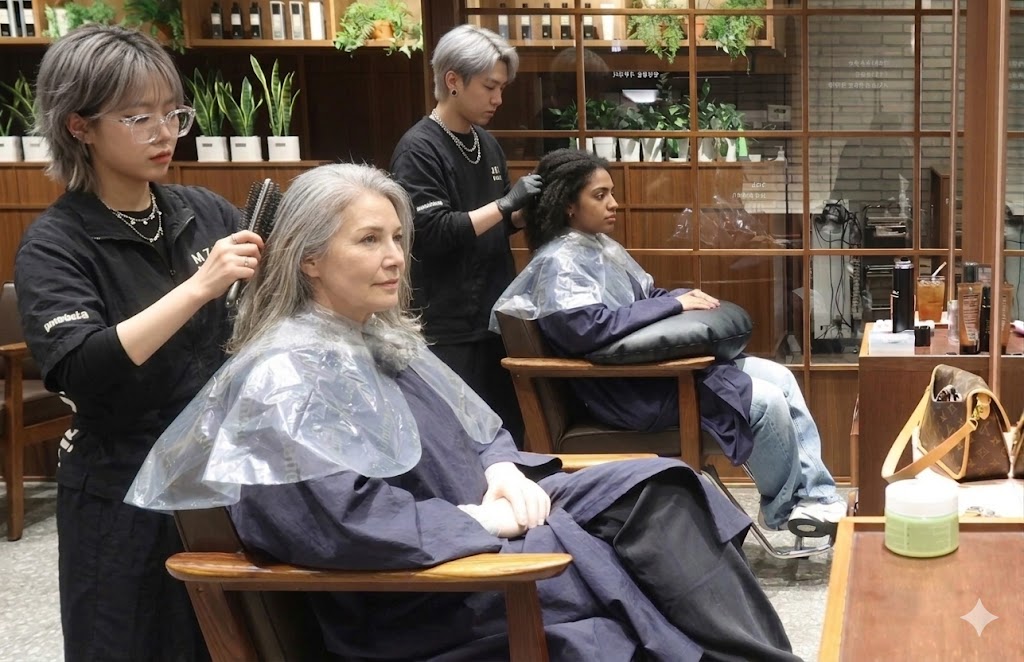
K-beauty experience tips: Hongdae, Myeongdong, Gangnam have the highest concentration of visitor-friendly beauty shops. Advance booking recommended. Full hair and makeup package typically ₩100,000–200,000. Search for English-friendly services on Naver or booking platforms before your trip.
Jjimjilbang — Korean sauna culture
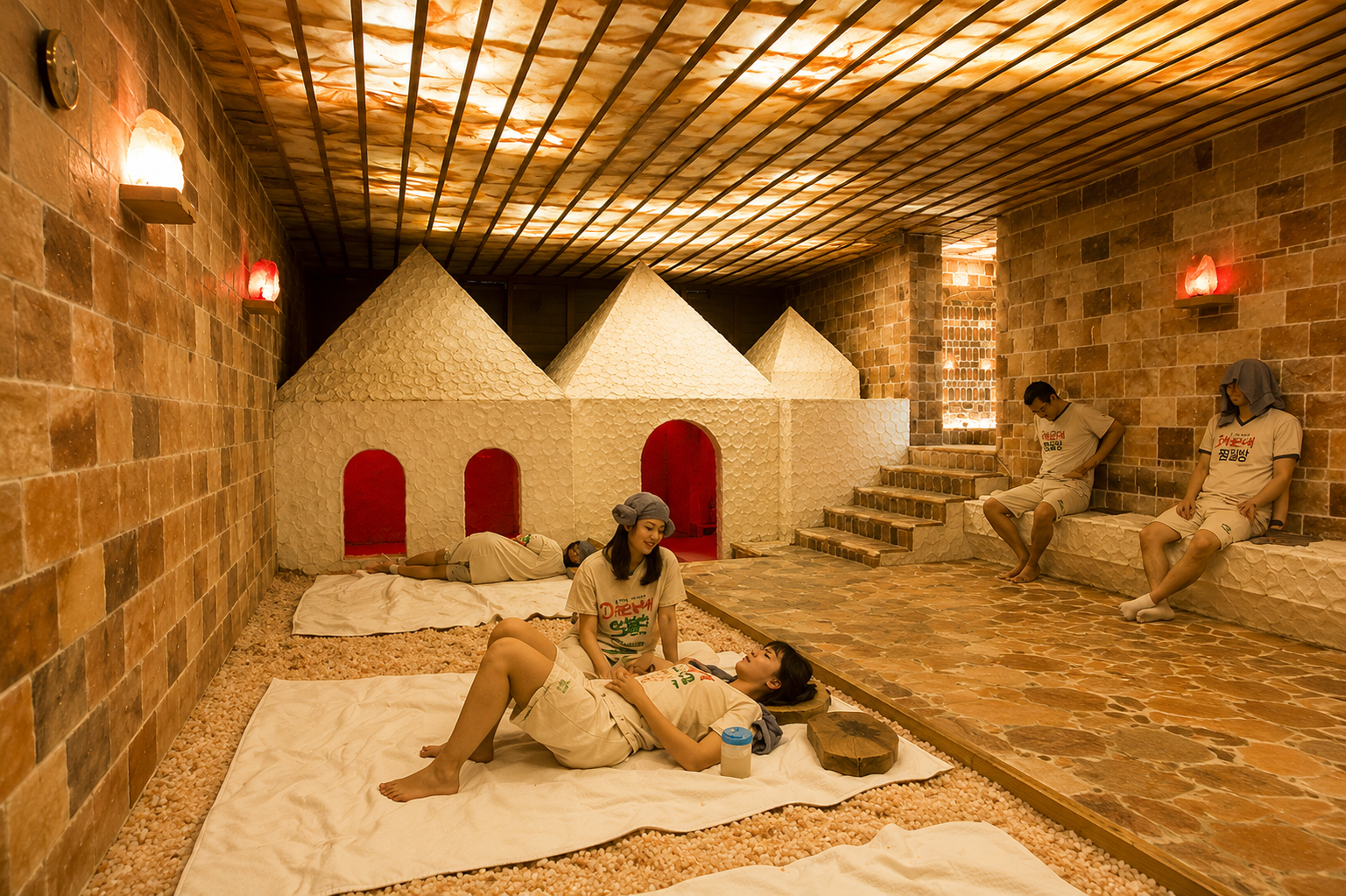
I genuinely love jjimjilbang, and I want to be clear about that upfront because I think it's one of the most underrated experiences in Korean travel. A jjimjilbang is a Korean bathhouse and sauna complex — hot baths, cold baths, various heated rooms (황토방 ocher rooms, 소금방 salt rooms, 얼음방 ice rooms), and a communal rest area where everyone lies around in matching short-sleeved outfits on heated floors. It sounds simple. It's deeply relaxing in a way that's hard to describe until you're inside one.
The two things you must have while you're there: sikhye (식혜) and a roasted egg. Sikhye is a sweet, slightly fizzy rice drink that tastes inexplicably better inside a jjimjilbang than anywhere else. The roasted egg — cooked slowly in the sauna heat until the shell turns slightly brown — has a particular soft, savory quality that regular boiled eggs don't have. Both are sold from small snack counters inside the facility for almost nothing. And the sheep-horn towel (양머리 수건) — wrapping your towel into horns on your head — is a jjimjilbang tradition that everyone does and no one can fully explain. Just do it. It's part of the experience.
Most jjimjilbang are open 24 hours and charge around ₩10,000–15,000 for entry, which includes the sauna facilities, the communal rest area, and the use of the towels and outfit provided. Some travelers use jjimjilbang as accommodation — sleeping in the rest area overnight is common and perfectly normal. Budget travelers especially find this a useful and surprisingly comfortable option.
Coin norebang — Korea's karaoke culture
Most people have heard of norebang (Korean karaoke rooms), but coin norebang is the version worth specifically seeking out. Instead of renting a private room by the hour, you put coins or tap a card to sing one or two songs at a time — typically ₩500–1,000 per song. The format removes all the commitment and most of the self-consciousness. You go in, sing two songs, and come out. Or you go in for two songs and end up staying for twenty because it turns out you needed this.
Solo visits are completely normal and nobody finds it strange. Groups take turns feeding coins and cheering each other on. The song libraries cover Korean pop, English, Japanese, and more — enough variety that non-Korean speakers have plenty to choose from. Coin norebang clusters around university neighborhoods like Hongdae, Sinchon, and Konkuk — and the lines outside popular spots after 10pm tell you everything you need to know about how much Koreans love them. Put it on an evening itinerary. You'll understand immediately why it's so popular.
Han River picnic — with food delivered to the grass
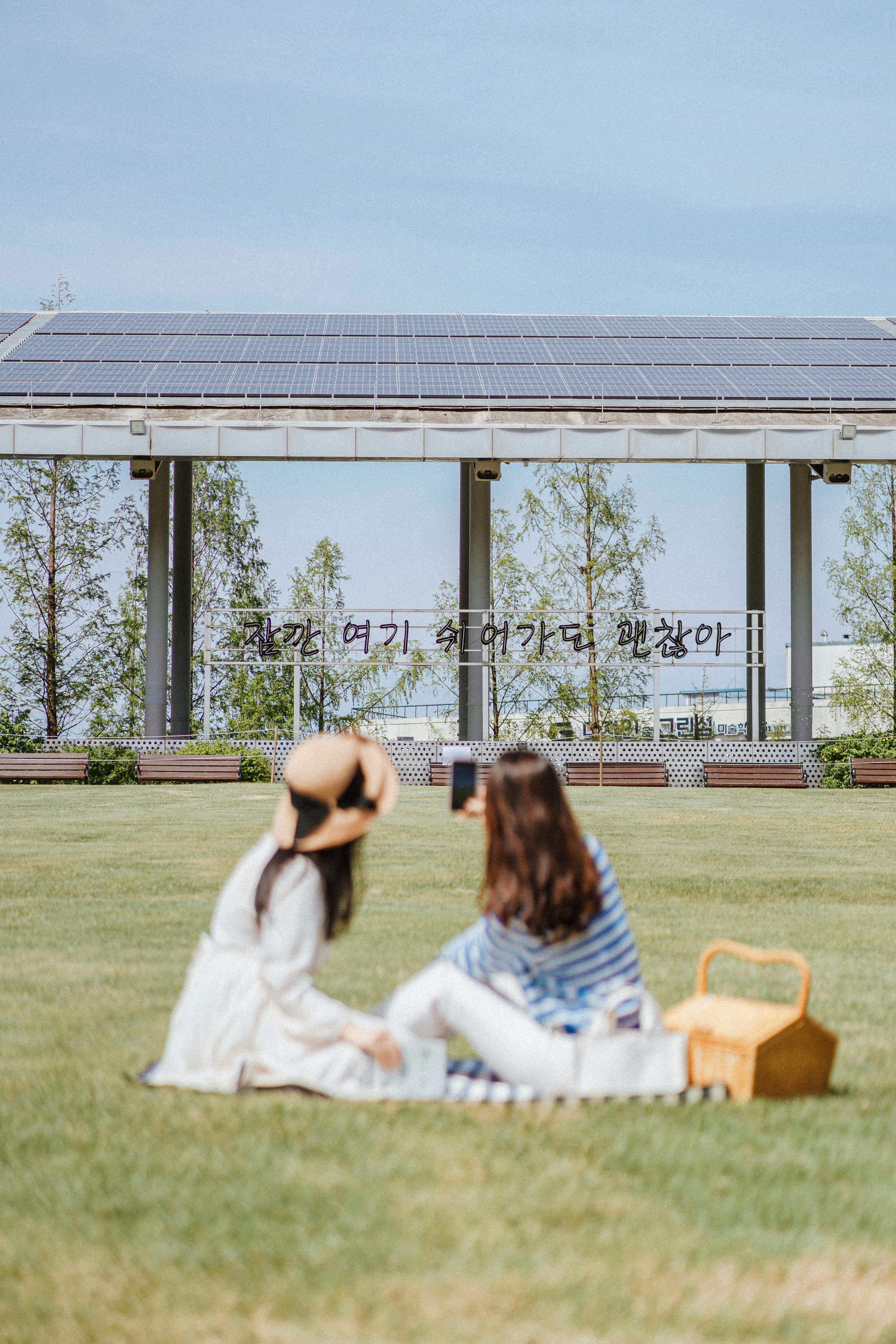
The Han River picnic is already well-known, but there's a detail about it that consistently surprises international visitors: you can have food delivered directly to your picnic mat. Korean food delivery apps (Baemin, Coupang Eats) allow you to set your delivery address as a specific Han River park zone — and the delivery rider brings your fried chicken, tteokbokki, pizza, or whatever you've ordered directly to where you're sitting on the grass. This is completely normal here. It happens constantly, all summer long.
The convenience store route works just as well for a lighter spread — grab drinks, snacks, and triangle kimbap and find a spot on the lawn. Picnic mats are available cheaply at Daiso if you want to pick one up. Yeouido, Ttukseom, and Banpo Hangang Parks are the most popular and accessible. Evening is the best time — the light over the river as the sun drops is genuinely beautiful, and the city cools down enough to be comfortable. This is what Seoul looks like when it's enjoying itself.
Korean convenience store culture — this is not a regular convenience store
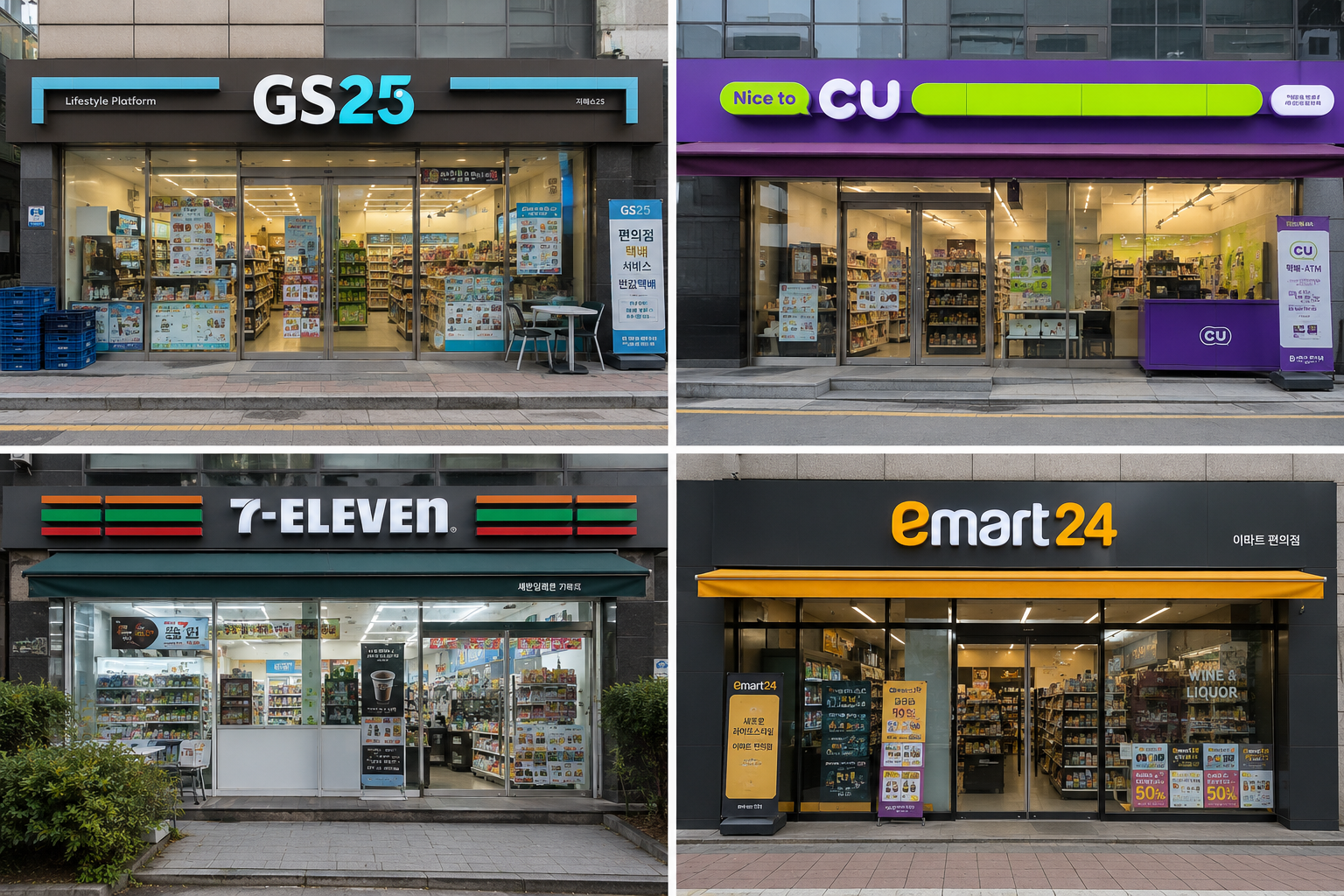
Korean convenience stores — CU, GS25, 7-Eleven, Emart24 — are not what you're used to from home. They're fast-moving retail environments that launch new products constantly, respond to viral trends within days, and serve as the primary snack and meal stop for a significant portion of the population. Walking into a Korean convenience store for the first time and browsing properly is a genuine experience.
What to try right now
Bbangppangi / Bbang Bujang character snacks — character-branded snacks that have become enormously popular with younger Koreans and international visitors alike. Cute packaging, good flavor, and the kind of thing people buy as a souvenir as much as a snack. If you see them, get them.
Dubai chewy cookies (두바이 쫀득쿠키) — the Korean convenience store response to the Dubai chocolate trend. A distinctly chewy texture that's different from any cookie you've had before. Worth trying specifically for the novelty of the texture.
Banana milk (바나나우유) — I'll just say it plainly: I still love banana milk. Bingrae's banana-flavored milk in its iconic chubby jar-shaped yellow container is one of the most recognizable items in any Korean convenience store, and for good reason. Sweet, creamy, and surprisingly satisfying. If you only try one convenience store item in Korea, make it this one. It tastes exactly like it looks and it's been making people happy for decades.
Beyond specific products, part of the experience is finding your own combinations — triangle kimbap with instant ramen, a fish cake skewer with a cold drink, whatever combination makes sense to you in the moment. Korean convenience stores reward exploration. Give yourself fifteen minutes, pick up five things you don't recognize, and see what happens.
Convenience store essentials: Banana milk (yellow jar) · Bbang Bujang character snacks · Dubai chewy cookie · Triangle kimbap · Cup ramen. This alone covers the convenience store experience.
Final thoughts — swap one tourist site for one of these
Ten visits to Gyeongbokgung will teach you about Korean history. One hour in a jjimjilbang with a cup of sikhye will teach you something about how Koreans actually rest. Both are valuable. But most Korea itineraries are weighted heavily toward the former and barely touch the latter — and that imbalance is worth correcting.
The coin norebang session that didn't end on schedule. The banana milk you drank standing outside a convenience store at midnight. The Han River evening when the fried chicken arrived and the city spread out in front of you and you understood for a moment why people live here. These are the memories that tend to last. Drop one sightseeing stop from your itinerary and replace it with one of the experiences on this list. Your trip will be better for it. Have an amazing time in Korea!