Best food in Busan — a local's complete guide to what you must eat
Table of contents
Intro — Busan is a city you visit to eat
Ask anyone who's been to Busan what they remember most and the answer is almost always food. Not the beach, not the cable car, not the bridges — food. The fish cake warm in your hand, the eel charring on a grill, the haenyeo seafood platter that makes you understand what fresh actually means. Busan has a food culture so strong it shapes the entire trip around itself.
My approach to eating in Busan has always been the same: a little of everything, from as many places as possible. Not one big meal at one big restaurant — small portions, multiple stops, constant movement. On my best days in Busan I've worked through eight or nine different dishes and snacks across a single day. Not because I overate, but because the city makes it easy and the food makes it impossible to stop. This guide is that approach — applied to the best things Busan has to offer.
Street food & snacks
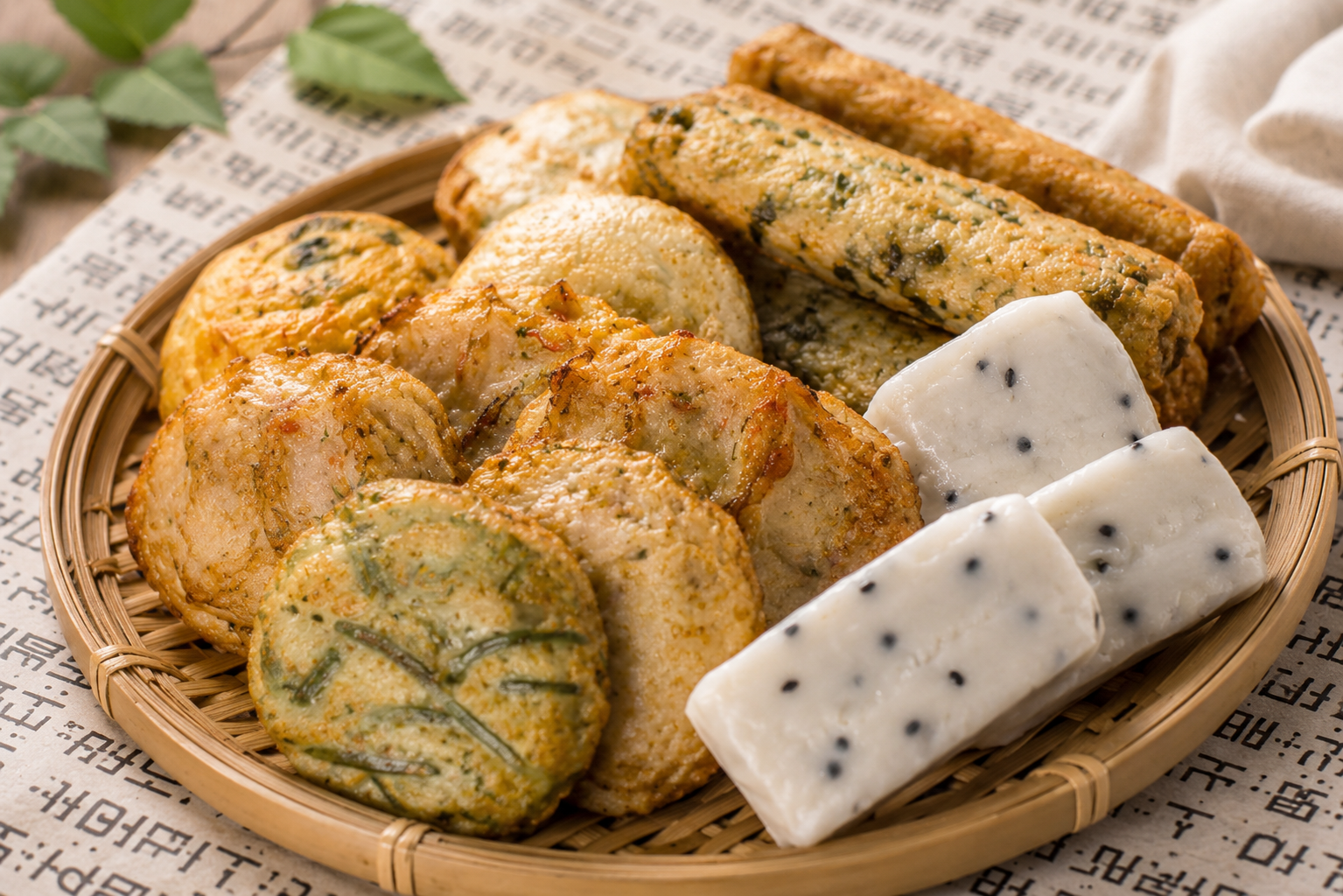
Samjin Eomuk & Goraesa — Busan fish cake
Fish cake (어묵, eomuk) is inseparable from Busan, and Samjin Eomuk and Goraesa are the two names that come up first, every time. I've had both and they're genuinely excellent — in a completely different category from the factory fish cake you find in supermarkets. Higher fish content, a texture that's properly springy and savory, a flavor that makes you realize what the baseline version has been missing.
Samjin Eomuk's flagship is on Yeongdo Island, with a fish cake museum attached that's worth a look in its own right. Different varieties available individually, so tasting and comparing is part of the experience. Goraesa is known for its fish cake croquette in particular and is based near Nampo-dong. Both make excellent souvenirs — vacuum-sealed to travel well — but the experience of eating them fresh on-site is what you're actually there for.
Ssiat hotteok — the seed-filled pancake
Busan's ssiat hotteok (씨앗호떡) is a different dish from the hotteok you'll find in Seoul. Instead of the standard sugar-syrup filling, this version is packed with sunflower seeds, pine nuts, peanuts, and other mixed seeds and nuts — crisp on the outside, sweet and deeply nutty inside. The texture combination is exceptional. You'll find it around Gukje Market and the Nampo-dong area.
There is always a line. The line is always worth it. Walking through the alleys of Gukje Market with a warm ssiat hotteok in hand is one of those simple Busan pleasures that ends up being a trip memory. Don't skip it.
Busan seafood — straight from the East Sea
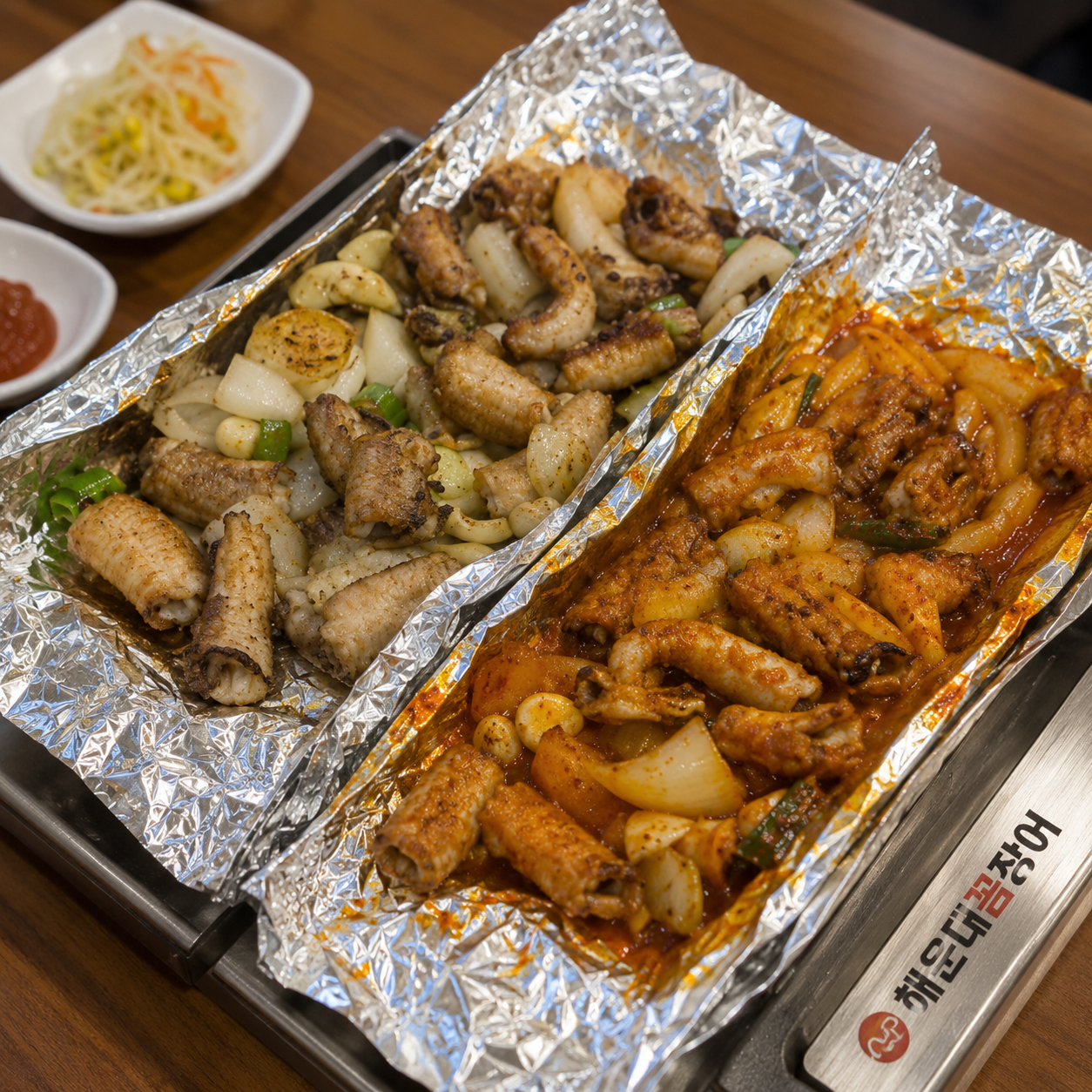
Haeundae kkomjangeo — grilled eel
Kkomjangeo (꼼장어, hagfish) is the Busan dish I keep recommending regardless of how hard it is to describe. The appearance when it arrives at the table can catch people off guard — it's not a conventionally attractive dish. But the flavor is something else: charcoal-grilled, chewy, savory, with a depth that pairs perfectly with soju in a way that makes you understand why Busan people eat it this way. The cluster of restaurants in the Haeundae kkomjangeo alley has been doing this for decades and the formula works exactly as well as it always has. An evening meal here, with the grill going and the night air coming in — I still think about it.
Gijang Haenyeo Village — seafood from the divers themselves
The haenyeo are Korea's female free-divers — women who have harvested seafood from coastal waters for centuries without equipment, diving on breath alone. In Gijang, you can eat a seafood platter prepared by the haenyeo themselves using what they caught that morning. Abalone, sea cucumber, sea urchin, shellfish — served simply, because nothing needs to be done to seafood this fresh. The difference from restaurant seafood is immediately apparent and impossible to describe adequately without experiencing it. Once is enough to understand why people make the trip specifically for this.
The gold-dusted squid sashimi — a Busan old-school restaurant story
This one is more of a story than a specific recommendation — but it's too good not to include. There's a type of old Busan restaurant (노포, nopo — the beloved long-running neighborhood spots) that serves squid sashimi dusted with gold flakes. I encountered this once and the theatrical presentation caught me completely off guard. The squid itself was exceptional, and the gold was — well, it was gold. Whether anyone is still doing this in the current gold price environment is genuinely uncertain (ha), but the experience stuck with me. The broader point is real: Busan's old-school restaurants have personality and quirk that no chain restaurant can replicate. When you find a nopo that's been running for decades, go in. You'll find things you didn't know to look for.
Busan local specialties
Naengchae jokbal — cold spicy pork
Regular jokbal — braised pork trotters — is a Korean staple. Busan's version, naengchae jokbal (냉채족발), is something different: the pork is served cold, with a sharp mustard sauce and fresh vegetables alongside. The first reaction from most people is skepticism — cold pork trotters? But a single bite explains it completely. The mustard heat cuts through the richness of the pork in a way that the hot version doesn't achieve. It's particularly compelling in warm weather, which is appropriate given that Busan is often warm. Try it once with an open mind.
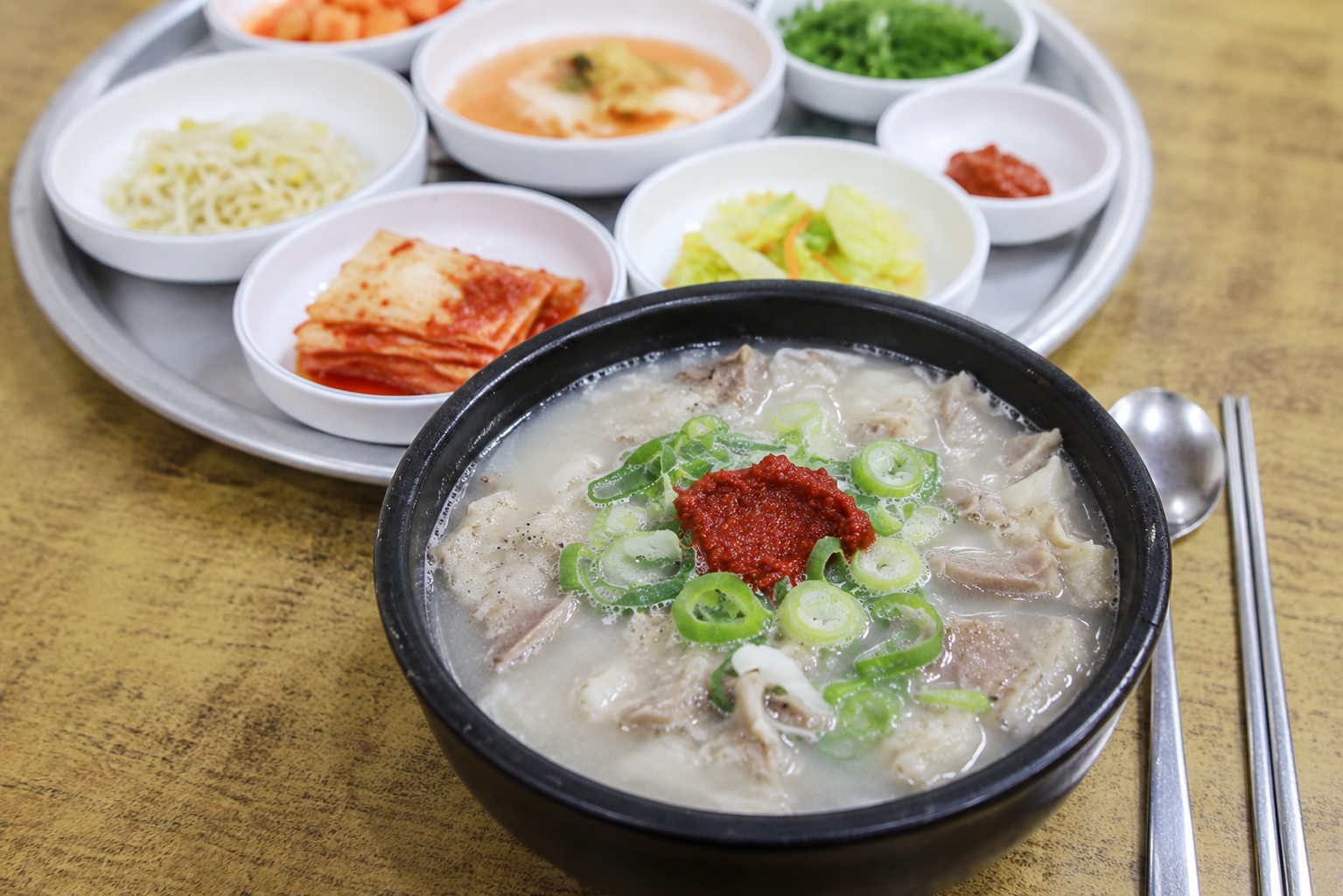
Dwaeji gukbap — pork bone soup
Busan's dwaeji gukbap (돼지국밥) is richer and deeper than versions you'll find in Seoul — a long-simmered milky pork bone broth with generous portions of pork inside. It's the breakfast food of Busan, the comfort food of Busan, the thing Busan people eat when they need to feel right again. An early morning bowl at an old neighborhood restaurant near a market is one of the most local things you can do in the city. Inexpensive, filling, and the kind of dish that makes you understand what soul food means.
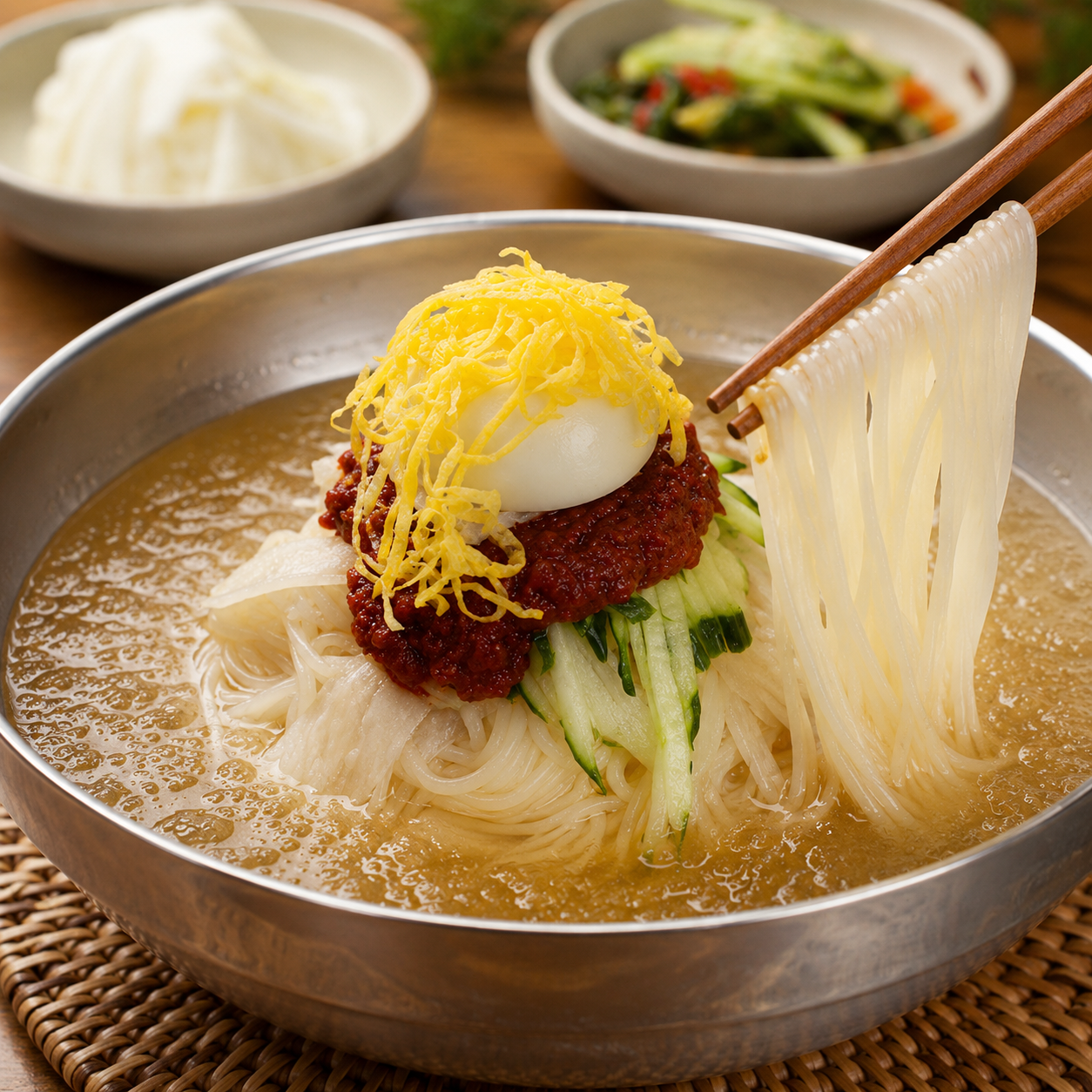
Milmyeon — Busan's own cold noodle
Milmyeon (밀면) is a cold noodle dish that exists specifically because of Busan's history. During the Korean War, displaced northerners who had made cold noodles (naengmyeon) all their lives couldn't source the right ingredients in the south, so they adapted — using wheat flour instead, and milmyeon was born. It's now one of Busan's most distinctive local dishes: slightly thicker and chewier than naengmyeon, with its own particular flavor profile. On a hot Busan afternoon, a bowl of milmyeon is what the city reaches for. It should be on your list too.
The Busan food crawl strategy — how to eat 8 things in one day
Busan's food scene rewards a specific approach: small portions across many stops rather than one big meal at one place. This is how I've always eaten in Busan, and it's how I'd recommend any visitor approach it. The city's best food experiences are often brief — a fish cake from a shop, a hotteok from a street stall, a bowl of soup from a market counter. Stringing these together across a day is more satisfying than any single restaurant meal.
A sample Busan food day: Start with dwaeji gukbap for breakfast — warm, filling, sets the tone. Mid-morning, ssiat hotteok at Gukje Market. Lunch: milmyeon or naengchae jokbal. Afternoon snack: Samjin Eomuk or Goraesa fish cake, a few pieces. Evening: kkomjangeo at Haeundae or haenyeo seafood at Gijang. That's six to seven distinct food experiences across one day — none of them excessive, all of them memorable.
The practical rule: keep portions small and keep moving. Order one or two pieces rather than a full portion wherever possible. Leave room for the next stop. Busan doesn't run out of things to eat — the only constraint is your capacity, so manage it wisely.
The Busan food philosophy: Many stops, small portions, constant curiosity. Don't fill up at one place. The city has more worth eating than any single trip can cover — the goal is to taste as widely as possible.
Final thoughts — go to Busan hungry
Busan's food isn't just good — it carries history, character, and the particular flavor of a port city that's been feeding people from the sea for generations. The fish cake tradition, the war-era ingenuity that created milmyeon, the haenyeo who've been diving these waters for centuries, the old restaurants with their eccentric gold-dusted presentations — every dish has a story behind it.
When you plan your Busan itinerary, give food the same priority as the sights. Build your days around eating as much as around seeing. The best Busan memories tend to be the food ones — the eel you can still taste, the haenyeo seafood that redefined what fresh means, the hotteok you ate walking through the market. Leave space in your stomach and in your schedule. Busan will fill both. Have an amazing trip!