Table of contents
- The short answer — and why it's more interesting than that
- Is Korea safe at night?
- Is Korea safe for solo female travelers?
- Is public transportation safe in Korea?
- Scams and petty crime — what to actually watch out for
- Lost belongings — Korea's surprisingly honest side
- Natural disasters and political situation
- Practical safety tips for visiting Korea
- Final thoughts — what it really feels like to be here
The short answer — and why it's more interesting than that
"Is Korea safe for tourists?" — Yes. And not just "yes, technically" — yes in a way that genuinely surprises most people who visit for the first time. I live in Seoul, I've lived here my whole life, and I walk around this city at all hours without a second thought. That's not a boast; it's just the reality of day-to-day life here.
Korea consistently ranks among the safest countries in the world for travelers. Violent crime rates are low, tourist-targeted scams are rare compared to many major destinations, and the infrastructure — public transport, emergency services, medical facilities — is excellent. The kind of general street-level danger that travelers often worry about in unfamiliar cities is largely absent here.
But "safe" doesn't mean "nothing to think about." There are things worth knowing before you arrive — some specific to Korea, some universal to travel anywhere. I'm going to give you the honest picture, including the things that are genuinely fine and the things that deserve a bit of attention.
The bottom line up front
Korea is one of the safest travel destinations in the world. Violent crime against tourists is extremely rare. Night safety is genuinely good. Solo female travel is very common and generally comfortable. The things to watch for are minor — not dangers, but sensible precautions any traveler should take anywhere.
Is Korea safe at night?
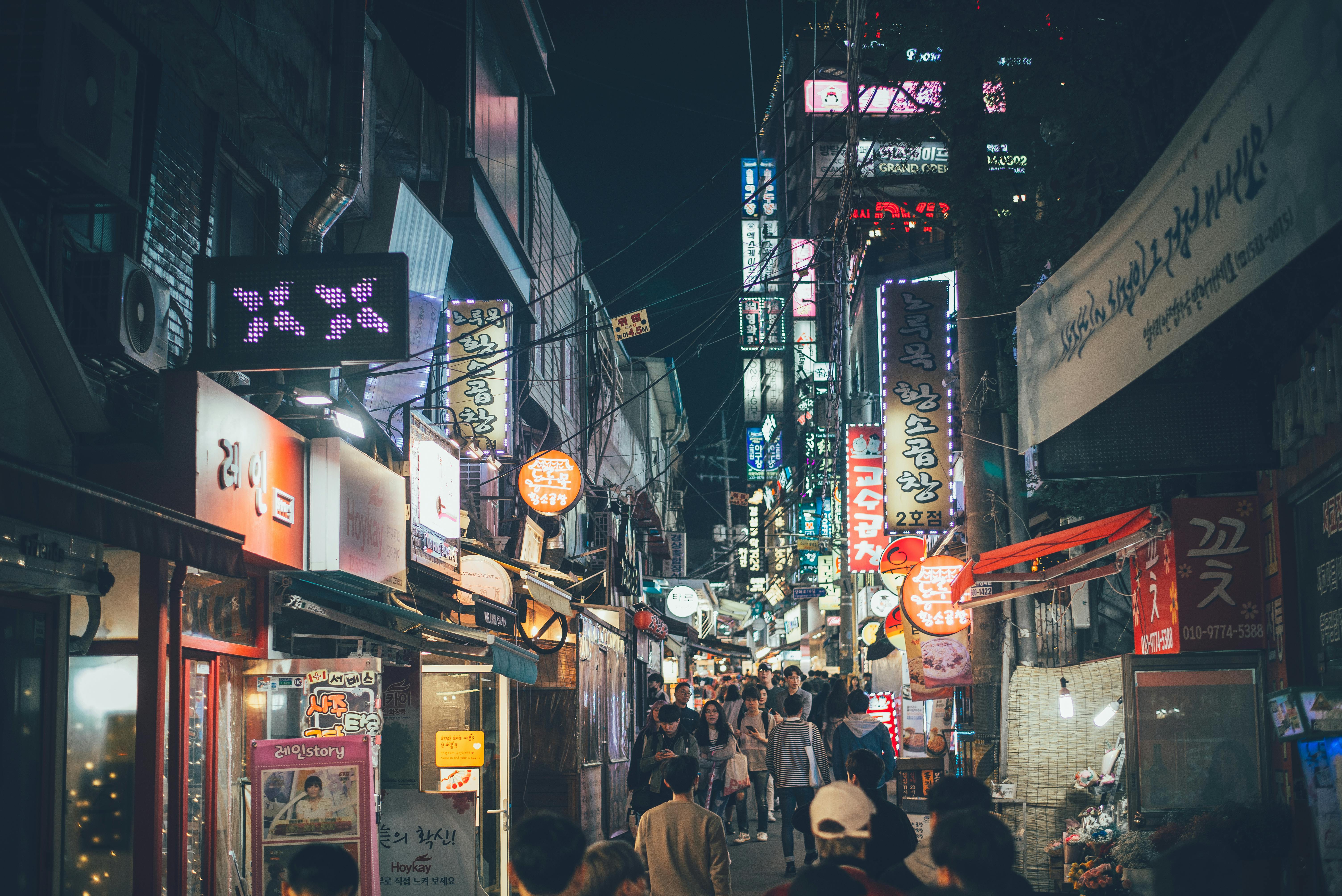
This is one of the most common questions I get, and the answer is one of Korea's genuine strengths as a destination: yes, Korea is remarkably safe at night. Seoul in particular is a city that doesn't really go to sleep — major neighborhoods like Hongdae, Itaewon, Myeongdong, and Gangnam are busy with people well past midnight, the streets are well-lit, and public transport runs late (the subway runs until around 1am, with all-night buses after that).
Walking home alone at 2am in a busy Seoul neighborhood is something that Koreans — men and women — do routinely without concern. That's not a statement I could make about most major cities. The general absence of street-level danger that visitors often expect from a big city is one of the things that surprises people most about Korea.
That said, the same common sense that applies anywhere applies here. Very late at night in areas with heavy drinking — Hongdae on a Friday, for example — the environment changes in tone, as it does in any nightlife district anywhere in the world. Nothing specifically dangerous, just the usual awareness you'd apply after midnight around bars anywhere. Stick to lit streets, don't accept drinks from strangers, and you'll be fine.
Night safety in Korea — what's actually true
Well-lit streets in all major tourist and residential areas
Subway runs until ~1am; all-night buses cover the rest
Convenience stores (24/7) on almost every block — always a lit refuge if needed
Locals of all ages walk alone at night routinely
Nightlife districts are busy but not dangerous — standard big-city awareness applies
Is Korea safe for solo female travelers?
Korea is one of the most popular solo female travel destinations in Asia, and that reputation is earned. I've seen countless female travelers — Korean and foreign — moving around Seoul, Busan, and Jeju entirely on their own, at all hours, without incident. The baseline street safety that Korea offers applies equally regardless of gender.
A few things that make Korea particularly comfortable for solo female travelers: the subway system is reliable and well-monitored, with women-only cars available during rush hour on some lines. Convenience stores are everywhere and always staffed. Cafés are abundant and completely normal places for a solo person to sit for hours. The culture around approaching strangers is generally reserved — you're unlikely to experience the persistent unsolicited attention that solo female travelers report in some other destinations.
Is Korea perfect? No. There are incidents, as there are everywhere, and anyone visiting should take standard precautions. But relative to most travel destinations, Korea is very comfortable for solo female travelers. It's one of the areas where I'd give Korea a genuinely strong rating without qualification.
Solo female travel in Korea — practical notes
Women-only subway cars available on some lines during rush hour
Well-lit, busy streets in all major areas make night walks comfortable
Cafés, convenience stores, and public spaces are always available as safe stops
Goshiwon (small solo accommodation) and guesthouses are widely used by solo female travelers
Standard precautions apply: share itineraries, keep phone charged, trust your instincts
Is public transportation safe in Korea?
Korea's public transportation is not just safe — it's one of the best systems in the world. The Seoul subway is clean, reliable, extremely well-signed in English, and runs frequently. Buses are extensive. Intercity trains (KTX) are punctual and comfortable. Taxis are metered and generally honest.
A few practical notes: use the official Kakao Taxi app to hail taxis rather than flagging them on the street — it's what locals use, it shows the fare estimate upfront, and it keeps a record of your ride. The T-money transit card (available at any convenience store) works on virtually all public transport nationwide and is the easiest way to pay. Google Maps and Naver Maps both give accurate transit directions in English.
Getting around Korea safely
Seoul subway: clean, safe, English-signage throughout, runs until ~1am
Taxis: use Kakao Taxi app — metered, fare shown upfront, ride recorded
T-money card: buy at any convenience store, works on subway, bus, and some taxis
KTX trains: safe, punctual, reserved seating — no need to worry about crowding
Navigation: Google Maps or Naver Maps both work well in English
Scams and petty crime — what to actually watch out for
Korea is not a high-scam environment by international standards, but it's not completely scam-free either. The most common issues visitors encounter are minor and avoidable with a little awareness.
The most frequently reported issue is overcharging at certain tourist-area restaurants — particularly in Itaewon and some Myeongdong spots where prices aren't clearly displayed. Always check the menu price before ordering, and confirm if any extras are being added. This isn't unique to Korea and isn't a scam so much as a tourist-area pricing reality.
Taxi overcharging can happen occasionally, particularly late at night when demand is high. Using the Kakao Taxi app largely eliminates this — the fare is estimated before you get in. If you do flag a cab, make sure the meter is running from the start.
Pickpocketing is relatively rare in Korea compared to many tourist destinations — Koreans leave belongings unattended in cafés routinely — but in crowded tourist areas like Myeongdong or busy subway stations during peak times, keep an eye on your bag as you would anywhere.
Minor things worth being aware of
Tourist-area restaurants: check menu prices before ordering, confirm extras
Taxis: use Kakao Taxi app to avoid late-night overcharging; confirm meter is running
Crowded areas (Myeongdong, busy subway cars): standard bag awareness
Nightlife: don't accept drinks from strangers — same rule as anywhere in the world
Street vendors: most are legitimate; use judgment as you would at home
Lost belongings — Korea's surprisingly honest side
Here's something that genuinely surprises most first-time visitors: Korea has an unusually high rate of lost items being returned. Phones, wallets, and bags left behind on the subway or in cafés are frequently handed in to station staff or left at the spot they were found. It's not guaranteed, but it happens with a frequency that feels notable compared to most countries.
If you lose something on the Seoul subway, report it immediately at the station's lost and found desk — items turned in are logged. For items left elsewhere, go back to where you were; Koreans often simply leave found items on a nearby surface or hand them to a shopkeeper rather than keeping them. This is one of those cultural things that's hard to explain but that travelers comment on repeatedly.
Natural disasters and political situation
Korea sits in a seismically active region but is not prone to major earthquakes by regional standards. There are no active volcanoes on the mainland. Typhoons can affect the Korean Peninsula in summer (July–September), mainly impacting the southern coast and Jeju — they're tracked well in advance and rarely cause major disruption to travel.
The most common question regarding Korea's political situation involves North Korea. The short answer: the situation on the Korean Peninsula has been in a stable — if tense — state of deterrence for decades. Seoul is far from the border, life in the city is entirely normal, and foreign governments including the US, UK, and most of Europe classify South Korea as safe for tourist travel. The North Korea factor is a geopolitical reality that Koreans live with calmly as part of daily life, and visitors should approach it the same way.
About the North Korea question
South Korea is a stable, functioning democracy with a strong military alliance. Seoul and all major tourist destinations are far from the border. Life here is completely normal. Most foreign governments rate South Korea as safe for travel. Koreans themselves are not anxious about this on a daily basis — and neither should visitors be.
Practical safety tips for visiting Korea
Before you arrive
Register with your home country's embassy or travel advisory service
Get travel insurance that covers medical — Korean hospitals are excellent but not free for visitors
Save the emergency number: 112 (police), 119 (fire/ambulance)
Download Naver Map or Google Maps — both work well offline with downloaded maps
Download Papago (translation app) — very useful for menus and signage
While you're here
Keep your phone charged — it's your map, translator, and taxi app all in one
Use Kakao Taxi for all taxi rides — metered, tracked, estimated fare shown upfront
T-money card for all transit — buy at any convenience store for ₩2,500If you feel unwell: Korean pharmacies (약국) are everywhere and pharmacists are helpful
Tourist police (English-speaking): 1330 hotline, available 24/7
Useful emergency contacts in Korea
Police: 112
Fire / Ambulance: 119
Korea Tourism Hotline (English, 24/7): 1330
Tourist Police (English-speaking): available at major tourist areas
Emergency medical: most major hospital emergency rooms have English support

Final thoughts — what it really feels like to be here
I want to end with something that data and bullet points don't quite capture: what it actually feels like to be in Korea as a visitor. The feeling — and I hear this from travelers constantly — is one of ease. Of being able to walk around without the low-level alertness that travel in some places requires. Of leaving your laptop on a café table while you go to the bathroom without a second thought, because everyone else is doing exactly the same thing.
Korea is a place where the social contract around public space works well. People mind their own business. The streets are clean. The infrastructure functions. Emergency services are responsive. If you need help, asking for it — even with a language barrier — generally results in someone going out of their way to assist you.
Is it perfect? No place is. But is Korea one of the safest, most functional, and most visitor-friendly destinations you can choose? Without question. Come with normal travel awareness, use the apps, get travel insurance, and spend your energy on enjoying one of the most interesting countries in the world. That's what the safety situation here allows you to do. Have an amazing trip!


