North Seoul One Day Itinerary — Gyeongbokgung, Bukchon, Gwangjang Market & Euljiro: A Local's Complete Guide
Table of Contents
Introduction
Who Is This North Seoul Itinerary For?
Morning — Gyeongbokgung / Changdeokgung + Gwanghwamun + Cheonggyecheon Option
Late Morning — Bukchon Hanok Village: 600-Year-Old Alleyways
Lunch — Gwangjang Market: Seoul's Street Food Mecca
Afternoon — Insadong or Ikseon-dong: Pick Your Vibe
Evening — Euljiro: Seoul's Coolest Retro Neighborhood
Bonus Option — Nollan Pungson City Tour Bus
North Seoul Practical Info: Transport, Costs & Hours
Final Thoughts
Introduction
If I only had one day in Seoul, I'd pick North Seoul without hesitation.
Gyeongbokgung Palace, Bukchon Hanok Village, Gwangjang Market, Insadong, Euljiro — these are the places people have heard of before they even land in Korea. And what makes them work as a single day itinerary isn't just that they're famous — it's that they're all within walking distance or one subway stop of each other. The flow is genuinely natural.
Whether it's your first time in Korea or you've visited Seoul before but never properly explored the north, this course delivers. I've taken groups of friends through this exact route more times than I can count, and nobody has ever left disappointed.
Everything is broken down by time of day — where to go, what to eat, what to watch out for. Just follow along.
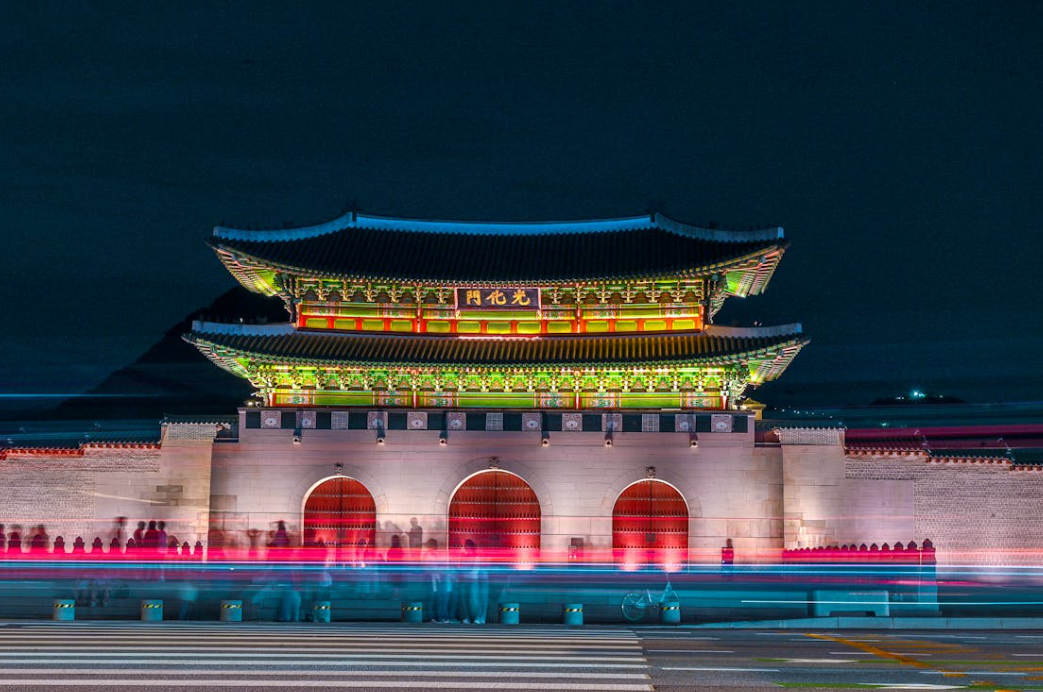
1. Who Is This North Seoul Itinerary For?
North Seoul Travel Recommendation Travel Style Itinerary Overview
This course tends to work best for certain types of travelers.
Highly recommended if you:
- Are interested in Korean history and traditional culture
- Want to wear hanbok and take photos at a royal palace
- Want to experience authentic Korean street food
- Are focused on getting great photos
- Have been to Seoul before but haven't properly done Euljiro or Gwangjang Market
- Are traveling with kids (City Tour Bus option available)
Difficulty level: Easy — mostly walkable, maximum 1–2 subway rides Daily budget estimate: Around 50,000–100,000 KRW per person (approx. $37–73 USD), food and admission included, shopping excluded Best season: Spring (March–May) and Fall (September–November) — though all seasons work
2. Morning — Gyeongbokgung / Changdeokgung + Gwanghwamun + Cheonggyecheon Option
Gyeongbokgung Changdeokgung Gwanghwamun Cheonggyecheon Admission Hanbok Rental Tips
Recommended time: 9:00 AM – 11:00 AM
Start the day at a palace. You have two options.
Gyeongbokgung Palace
- The largest and most iconic of Joseon Dynasty's Five Grand Palaces
- Admission: 3,000 KRW (approx. $2.20 USD)
- Free entry if wearing hanbok — rentals available nearby for 15,000–30,000 KRW (approx. $11–22 USD) per 1–2 hours
- Closed Tuesdays
- The earlier you go, the fewer people and better light for photos
Changdeokgung Palace
- UNESCO World Heritage Site
- The Secret Garden (Biwon) tour is the real highlight — a separate guided experience through a stunning royal garden
- Admission: 3,000 KRW (approx. $2.20 USD) / 8,000 KRW with Secret Garden (approx. $5.80 USD)
- Closed Mondays
- Secret Garden tours run on a set schedule — pick up your ticket at least 30 minutes before your preferred time slot
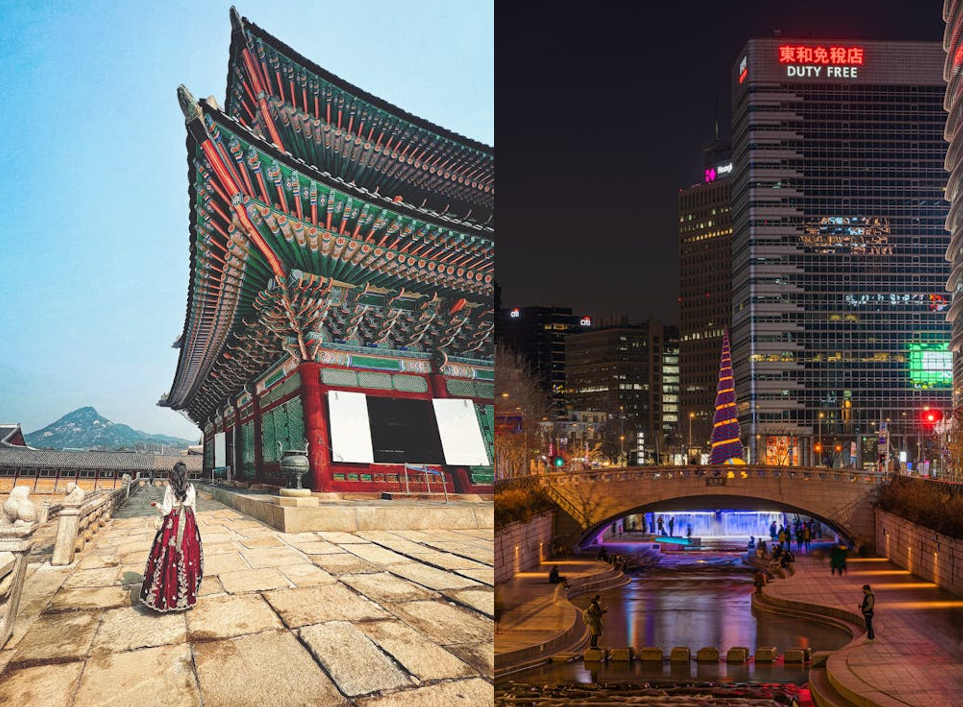
💡 Add Gwanghwamun Plaza + Cheonggyecheon to your morning Gwanghwamun Plaza — the grand open square in front of the palace — is worth spending a few minutes in on its own. Walk 10 minutes south from there and you'll hit the starting point of Cheonggyecheon Stream. Cheonggyecheon is also covered in the Central Seoul itinerary, but since it connects directly on foot from Gwanghwamun, it fits naturally into a North Seoul morning. A quick stroll along the stream start, then back up to the palace — it works well as a warm-up before the main sightseeing begins.
Local tip: Gyeongbokgung is better for first-timers — it's bigger, more photogenic, and easier to navigate without a guide. Changdeokgung is worth it if the Secret Garden tour appeals to you. If you want to do both, it's a 15-minute walk between them and very doable in a half-day.
3. Late Morning — Bukchon Hanok Village: 600-Year-Old Alleyways
Bukchon Hanok Village Visiting Hours Rules Photo Spots
Recommended time: 10:00 AM – 12:00 PM
Bukchon Hanok Village is a 10-minute walk from Gyeongbokgung. This is a neighborhood of 600-year-old hanok (traditional Korean houses) that still functions as a residential area — real people live here.
Important rules for visiting Bukchon (as of March 2025):
- Tourist access is restricted before 10:00 AM and after 5:00 PM
- This is a residential neighborhood — keep noise down and ask before photographing residents
- No eating or drinking in the alleyways
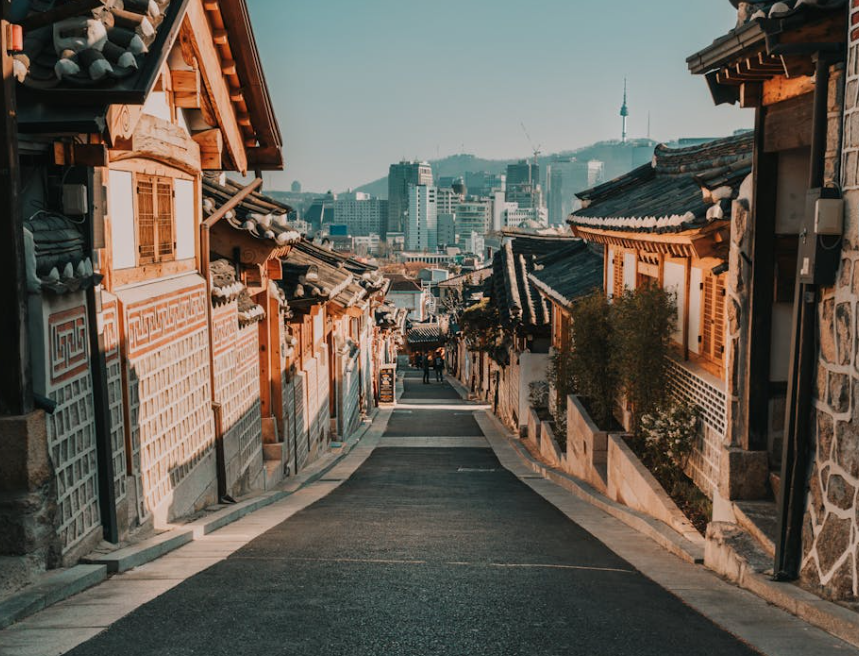
Best photo spot: The most iconic view in Bukchon is Bukchon-ro 11-gil — a stepped alleyway where layered tile rooftops cascade down the hillside. Go as early as possible (right at 10:00 AM) for the fewest people. By 2:00 PM, there's often a line to take photos here.
Local tip: Bukchon isn't a place to rush through. The point is to wander slowly — notice the curved eaves, the stone walls, the glimpses of Seoul's skyline framed at the end of a narrow alley. Many of the hanok buildings have been converted into small cafés, which makes for a natural stopping point to rest and take it all in.
4. Lunch — Gwangjang Market: Seoul's Street Food Mecca
Gwangjang Market Must-Eat Food Mayak Gimbap Bindaetteok Yukhoe Prices
Recommended time: 12:00 PM – 1:30 PM
From Bukchon, Gwangjang Market is one subway stop or about a 20-minute walk. The timing lines up perfectly with hunger.
Gwangjang Market has been around since 1905, making it one of Seoul's oldest continuously operating markets. It became internationally famous after being featured on Netflix's Street Food, and that attention is completely deserved.
The three things you have to eat:
🥢 Mayak Gimbap (마약김밥) Bite-sized seaweed rice rolls served with a mustard dipping sauce. The name means "drug" in Korean — as in, addictively good. Price: approx. 3,000–4,000 KRW ($2.20–3 USD)
🥞 Bindaetteok (빈대떡) Thick savory pancakes made from mung bean batter. Crispy on the outside, soft inside. The local way to eat them is with makgeolli (Korean rice wine). Price: approx. 4,000–5,000 KRW ($3–3.70 USD)
🥩 Yukhoe (육회) Korean beef tartare dressed with pear, sesame oil, and sugar — sweet, nutty, and surprisingly delicious. It sounds intimidating at first, but it's one of those things people come back specifically for. Price: approx. 10,000–15,000 KRW ($7.30–11 USD)
Local tip: The upstairs dining area is a bit more comfortable than the ground-floor stalls. Lunch peak (12–1 PM) is competitive for seats — aim to arrive just before noon or after 1:00 PM for a more relaxed experience.

5. Afternoon — Insadong or Ikseon-dong: Pick Your Vibe
Insadong Ikseon-dong Difference Shopping Café Recommendation
Recommended time: 2:00 PM – 4:00 PM
Both are within a 10–15 minute walk from Gwangjang Market. There isn't quite enough time to do both properly, so pick based on what you're after.
Insadong — Traditional crafts and souvenirs
- Traditional ceramics, hanji (Korean paper) products, calligraphy, craft shops
- Ssamziegil — a spiral-structured traditional shopping courtyard tucked inside Insadong, worth exploring
- Lots of traditional tea houses and Korean dessert cafés for an afternoon snack
- Best for: Anyone focused on shopping, souvenir hunting, or traditional craft experiences
Ikseon-dong — Hanok cafés and atmospheric alleyways
- 1930s-era hanok buildings converted into cafés, restaurants, and small bars
- Narrower and more intimate than Bukchon — less of a tourist site, more of a neighborhood
- Packed with photogenic cafés
- Best for: Café hopping, photography, anyone who wants to experience hanok culture in a more low-key setting
Local tip: The two neighborhoods are only a 5-minute walk apart. If you have time, it's possible to browse Insadong briefly and then finish with a café stop in Ikseon-dong — they pair well together.
6. Evening — Euljiro: Seoul's Coolest Retro Neighborhood
Euljiro Hip Cafés Bars Retro Atmosphere Evening Itinerary
Recommended time: 5:00 PM onwards
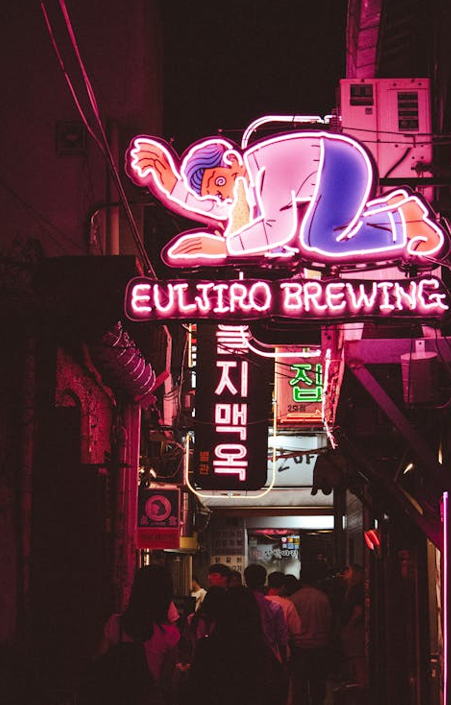
Euljiro is interesting during the day, but the real Euljiro starts after dark.
What was originally a dense industrial district — printing shops, lighting stores, metalwork factories — has quietly been taken over by some of Seoul's most distinctive bars, cafés, and restaurants. Old signage sits next to neon lights. A wine bar shares a wall with a steel fabrication shop. That incongruous combination is exactly what makes Euljiro unlike anywhere else in the city.
Things to do in Euljiro:
- Wander without a map — the best finds here are accidental. That's not a cliché, it's genuinely how Euljiro works
- Focus around Euljiro 3-ga and 4-ga station exits
- Grab a beer at one of the old-school pojangmacha (street tent bars) — as local as it gets
- Find a rooftop bar and watch Seoul's skyline at night
Local tip: Don't over-research Euljiro before you go. Looking up a specific list of places and checking them off defeats the point. Get off at Euljiro 3-ga station, start walking, and let the neighborhood do its thing.
7. Bonus Option — Nollan Pungson City Tour Bus
Seoul City Tour Bus Route DDP Gwanghwamun Cheong Wa Dae Boarding Tips
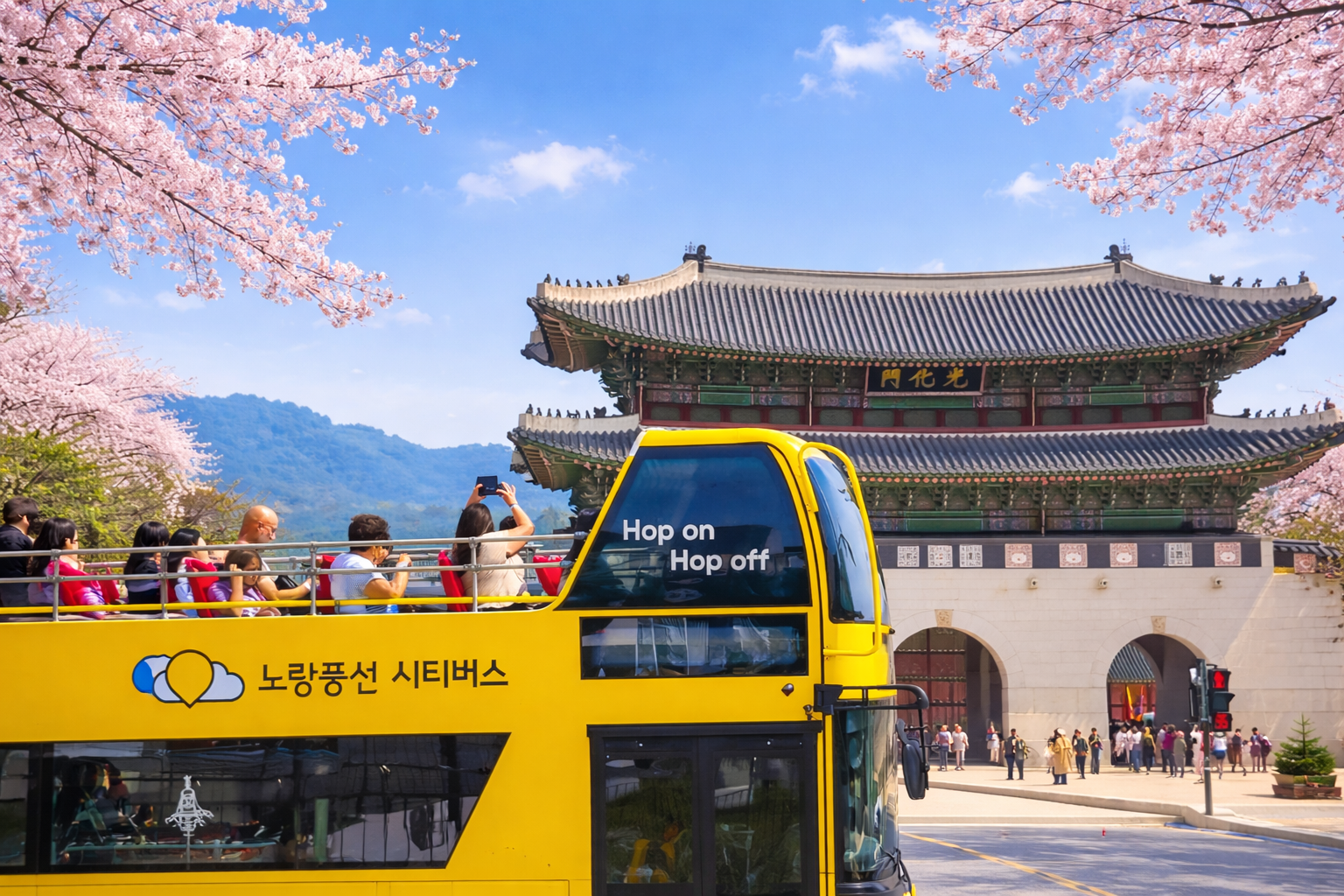
If walking the whole day sounds like a lot, or you're traveling with kids, the Nollan Pungson (Yellow Balloon) Seoul City Tour Bus is genuinely worth considering.
I rode it with my kid, and honestly it was better than I expected. The route covers Gyeongbokgung, Bukchon, Gwanghwamun — all the North Seoul highlights — plus it passes right in front of Cheong Wa Dae (the former Presidential Blue House), which isn't easy to access independently. Sitting on the open-top second floor with the breeze going through the city, it stops feeling like transportation and starts feeling like its own attraction.
I got off at Gwanghwamun with my kid and we played around the plaza fountain for a while, then hopped back on and got off at Namdaemun Market. There's a whole alley of galkchi-jorim (braised hairtail fish) restaurants tucked in there — we found one and sat down for lunch, and honestly that meal ended up being the highlight of the whole day. Sometimes it's not the landmark, it's the lunch.
Nollan Pungson City Tour Bus — Key Info (Traditional Culture Course):
| Starting point | DDP (Dongdaemun Design Plaza) |
| Operating hours | 9:30 AM – 5:00 PM |
| Frequency | Every 30–40 minutes |
| Full loop duration | Approx. 90 minutes |
| Adult fare | 27,000 KRW (approx. $20 USD) |
| Child fare (48 months–high school) | 20,000 KRW (approx. $15 USD) |
| Under 48 months | Free (no seat provided) |
Major stops: DDP → Euljiro → Cheong Wa Dae → Tongin Market → Gwanghwamun Plaza → Seoul Station → Namdaemun Market → Namsan → Myeongdong → Jongno → Insadong → Gwangjang Market → DDP
💡 Why board at DDP: DDP is where the route starts, which means the bus leaves empty from here. If you board at a middle stop, seats — especially the front row of the upper deck — may already be taken. Board at DDP if claiming a good upper-deck spot matters to you.
⚠️ Season note: The upper deck is completely open-air — sun and wind hit directly. Spring (March–May) and fall (September–November) are by far the best seasons for this. In summer, the upper deck can be genuinely brutal in the heat. If you're riding in summer, load up on sunscreen and try to board on an early morning departure.
8. North Seoul Practical Info: Transport, Costs & Hours
North Seoul Travel Transport Admission Hours Practical Guide
📍 Full Day at a Glance
| 9:00–11:00 AM | Gyeongbokgung or Changdeokgung (+ Gwanghwamun / Cheonggyecheon option) | Subway Line 3 — Gyeongbokgung or Anguk Station |
| 11:00 AM–12:00 PM | Bukchon Hanok Village | 10-min walk from palace |
| 12:00–1:30 PM | Gwangjang Market (lunch) | 1 subway stop or 20-min walk |
| 2:00–4:00 PM | Insadong or Ikseon-dong | 10–15 min walk from market |
| 5:00 PM onwards | Euljiro | Subway Line 2 — Euljiro 3-ga Station |
💰 Budget Guide (per person)
| Gyeongbokgung admission | 3,000 KRW (approx. $2.20 USD) |
| Hanbok rental (optional) | 15,000–30,000 KRW (approx. $11–22 USD) |
| Gwangjang Market lunch | 10,000–20,000 KRW (approx. $7–15 USD) |
| Café 1–2 drinks | 10,000–16,000 KRW (approx. $7–12 USD) |
| Euljiro dinner & drinks | 20,000–40,000 KRW (approx. $15–29 USD) |
| City Tour Bus (optional) | 27,000 KRW (approx. $20 USD) |
| Total | Approx. 58,000–136,000 KRW ($42–99 USD) |
🚇 Getting Around: Transport Options
① T-money Card
- Available at convenience stores and subway stations. Card itself costs 500 KRW (approx. $0.40 USD)
- Works on subway, bus, and taxi
- Base subway fare: 1,400 KRW (approx. $1 USD)
- Credit card tap-and-go works too, but T-money is more convenient
- For short trips, T-money is all you need
② Climate Card (기후동행카드) — Worth it if you're moving around a lot
Seoul's unlimited transit pass, now available in short-term options for visitors:
| 1-day | 5,000 KRW | approx. $3.70 |
| 2-day | 8,000 KRW | approx. $5.90 |
| 3-day | 10,000 KRW | approx. $7.30 |
| 5-day | 15,000 KRW | approx. $11 |
| 7-day | 20,000 KRW | approx. $15 |
Covers: Seoul subway + Seoul-licensed city/village/night buses + Ttareungi public bikes — all unlimited Does NOT cover: Sinbundang Line, express/airport buses, Incheon/Gyeonggi regional lines
⚠️ Important for foreign visitors — physical card only Korean residents can use the mobile app (Android), but foreign visitors can only use the physical card. This applies to iPhone users too — the app is Android-only and not available for foreigners regardless.
Where to buy the physical card:
- Seoul Metro Lines 1–8 station customer service offices
- Convenience stores (CU, GS25, 7-Eleven)
- Seoul Tourism Plaza Visitor Center
- Myeongdong Tourist Information Center
⚠️ Short-term passes activate immediately upon charging — charge it on the morning of your first day. If you're taking 4+ subway or bus rides per day, the Climate Card works out cheaper than individual T-money fares.
③ Download Naver Map before you go Google Maps has inconsistent walking and bus routing in Seoul. Naver Map supports English and is accurate for subway, bus, and walking directions. Download it before your trip.
⏰ Opening Hours & Closures
| Gyeongbokgung | Closed Tuesdays |
| Changdeokgung | Closed Mondays |
| Bukchon Hanok Village | Tourist access: 10:00 AM – 5:00 PM only |
| Gwangjang Market | Open daily; some vendors closed Mondays |
| City Tour Bus | Operates Tuesday–Sunday (closed Mondays) |
Final Thoughts
A North Seoul day puts 600 years of Korean history and one of the city's most cutting-edge neighborhoods into the same itinerary — and somehow it flows. Morning in a Joseon-era palace, evening under neon lights in a former industrial district. That contrast is a very Seoul thing, and North Seoul is probably where you feel it most clearly.
Drop any questions in the comments — happy to help plan your day.
Seoul Neighborhoods Guide — Best One-Day Itinerary for Each of the 5 Areas, Straight from a Local
Seoul Neighborhoods Guide — Best One-Day Itinerary for Each of the 5 Areas, Straight from a Local Table of Contents0. Why Plan Your Seoul Itinerary by Direction?1. North Seoul — A Day Steeped in Tradition2. East Seoul — A Trendy & Hip Day Out3. Centr
koreawithlocal.com
East Seoul One Day Itinerary — Seongsu-dong, Seoul Forest, Jamsil & Ttukseom Han River: A Local's Trendy Day Out
East Seoul One Day Itinerary — Seongsu-dong, Seoul Forest, Jamsil & Ttukseom Han River: A Local's Trendy Day OutTable of ContentsWho Is This East Seoul Itinerary For?Morning to Afternoon — Seongsu-dong: Seoul's Hippest NeighborhoodAfternoon — Seoul F
koreawithlocal.com
West Seoul One Day Itinerary — The Hyundai Seoul, Yeouido Han River & Hongdae : A Local's Complete Guide
West Seoul One Day Itinerary — The Hyundai Seoul, Yeouido Han River & Hongdae : A Local's Complete GuideTable of ContentsWho Is This West Seoul Itinerary For?Morning to Afternoon — The Hyundai Seoul: When a Mall Becomes a DestinationAfternoon — Yeoui
koreawithlocal.com
Gangnam One Day Itinerary — COEX, Bongeunsa, Apgujeong & Garosu-gil: A Local's Complete Guide
Gangnam One Day Itinerary — COEX, Bongeunsa, Apgujeong & Garosu-gil: A Local's Complete GuideTable of ContentsWho Is This Gangnam Itinerary For?Morning — COEX & Starfield Library: The Beast's Library in Real LifeLate Morning — Bongeunsa Temple: A Tho
koreawithlocal.com
Central Seoul One Day Itinerary — Namsan Tower, Itaewon, Myeongdong & DDP: A Local's Complete Guide
Central Seoul One Day Itinerary — Namsan Tower, Itaewon, Myeongdong & DDP: A Local's Complete GuideTable of ContentsWho Is This Central Seoul Itinerary For?Morning — Namsan Tower: All of Seoul at Your FeetLunch — Itaewon: Seoul's Most International M
koreawithlocal.com


