National Museum of Korea — a local's complete guide to Seoul's best free museum
Table of contents
Why the National Museum of Korea belongs on your Seoul itinerary
My university was near the National Museum of Korea, and professors used to recommend visiting during free periods — almost as assigned cultural homework. At the time I didn't need much convincing. I'd catch a bus over during a gap between classes, walk through a few galleries, sit somewhere quiet for a while, and come back to campus feeling genuinely different. Steadier. More grounded. It sounds like an overstatement for a museum visit, but the place has a quality that's hard to explain until you've been inside it.
That was my 20s. I think about going back now — in my 40s, with my children, holding their hands through the same galleries I walked alone back then. What would it feel like to see that version of myself superimposed on the same space? A 20-something student on a solo afternoon becoming a parent walking slowly with small people who are encountering all of this for the first time. I find that image genuinely moving. I'm looking forward to it.
In the meantime: the National Museum of Korea is one of the most important buildings in Seoul for understanding what this country actually is. It's been free to enter for years, and the quality of what's inside is world-class. Admission fees are being introduced — a sign of how seriously this institution takes its own value — but the museum has earned that ask many times over. If you're in Seoul and you have even a half-day to spare, this is where to spend it.
What's inside — highlights and what to see
The permanent collection
The permanent collection covers Korean history from prehistory through the modern era across six floors of exhibition space. The scale is genuinely impressive — over 220,000 artifacts in the collection, with thousands on display at any one time. You could visit multiple times and keep finding things you missed.
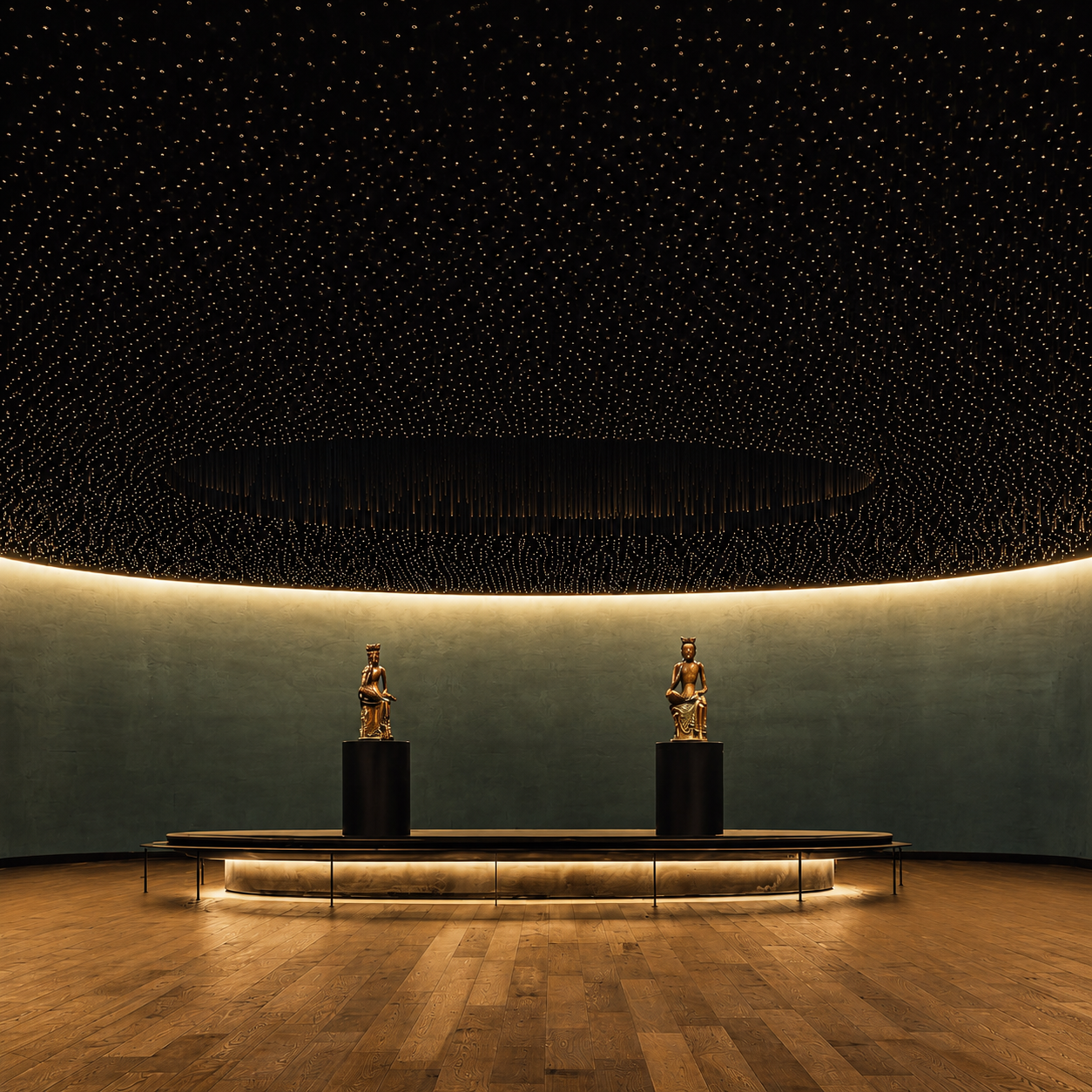
A few highlights worth specifically looking for. The Bangasayusang (반가사유상) — a gilt bronze Maitreya bodhisattva in a posture of contemplation, one leg crossed, one hand raised to the cheek — is one of the most beautiful objects in Korean cultural heritage. It has its own dedicated hall now, lit and displayed in a way that gives the piece the space and attention it deserves. Seeing it in person is different from photographs. The stillness in the figure is palpable.
The Silla and Goryeo ceramics sections are exceptional. Korean celadon pottery — those distinctive grey-green glazed pieces from the Goryeo period — is some of the most refined ceramic work produced anywhere in the world during that era. The collection here represents it at the highest level.
The calligraphy and painting galleries offer a different pace — slower, more contemplative. If you go without a fixed agenda and let yourself stop at whatever catches your attention rather than trying to see everything systematically, the museum rewards that approach far more generously.
The building and grounds
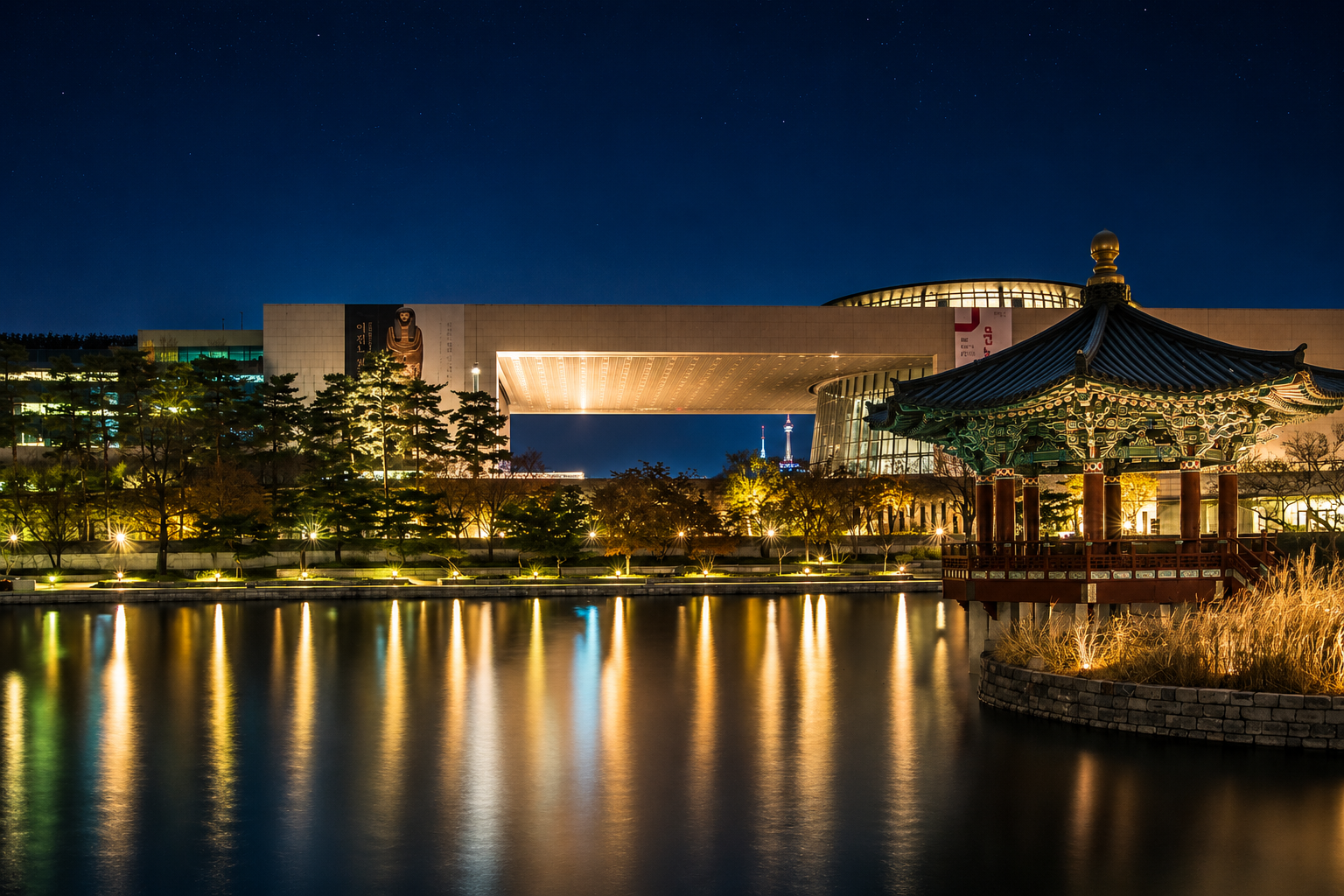
The museum building itself is worth noting. The architecture is designed to frame Namsan in the background — from the main hall, looking through the glass, the mountain sits directly in the sightline. It's an intentional composition that puts the museum in conversation with the city around it. The grounds outside are spacious and well-maintained, with reflecting pools and walking paths that make the outdoor space as appealing as the interior.
On clear days, the exterior walk from the entrance to the main building is lovely. There's a quality of calm around the museum — the scale of the grounds, the distance from street noise — that you don't often find in central Seoul. I used to sit outside between galleries when I visited as a student. I'd just be still for a while. The place allows that.
Museum shop and goods
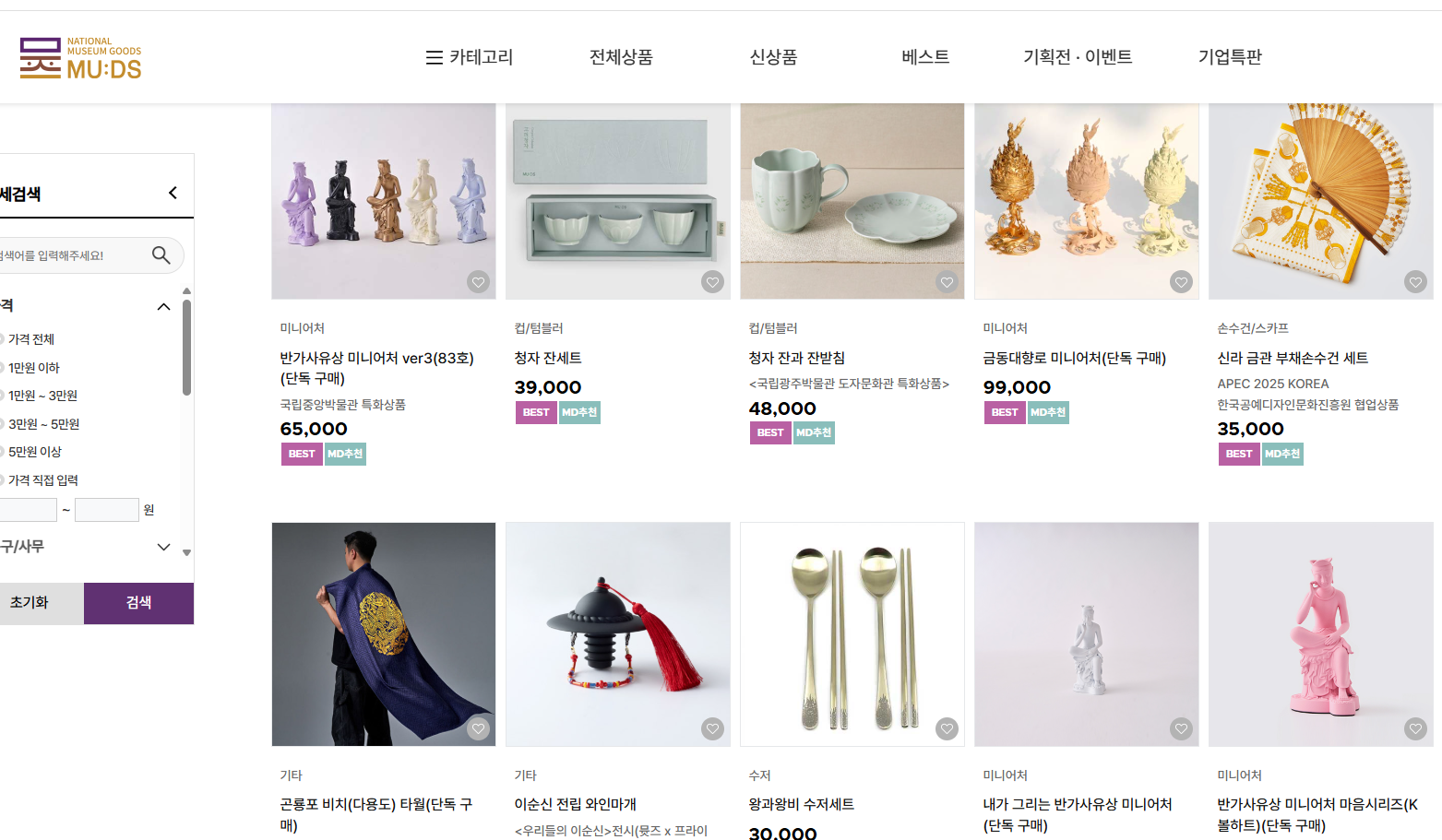
The museum shop has genuinely improved in recent years. The goods range has become something worth spending time in — well-designed items inspired by the collection, from stationery and prints to ceramics and textiles. Korean museums have gotten much better at translating their collections into objects people actually want to own and take home. The National Museum shop is a good example of what that looks like when done properly. It's the kind of place where you go in for a quick look and stay longer than planned.
Practical information — admission, hours, access
Admission: The museum has been free for most of its history — one of Seoul's great gifts to visitors. Paid admission is being introduced, so check the official website for current pricing before your visit. Special exhibitions have always been separately ticketed. The permanent collection remains the main draw regardless.
Hours: Generally open Tuesday through Sunday, closed Mondays. Hours vary by day and season — the museum opens late on some weekday evenings. Check the official National Museum of Korea website (museum.go.kr) for current schedules before visiting.
Getting there: Ichon Station (이촌역) on Line 4 and the Gyeongui-Jungang Line connects directly to the museum — there's a dedicated exit with a covered walkway straight to the entrance. It's one of the most convenient museum access points in Seoul. No need to navigate above ground at all.
How long to allow: A minimum of two hours for a meaningful visit to the permanent collection. Three to four hours if you want to include the museum shop, outdoor grounds, and any special exhibitions. The museum is not a place to rush — the experience improves significantly when you give it time.
Quick info: Ichon Station (Line 4) → covered walkway directly to entrance. Allow 2–4 hours minimum. Check museum.go.kr for current admission fees and hours. Shop worth visiting on the way out.
What to do nearby — a full day in Yongsan
The National Museum sits in Yongsan, one of Seoul's most interesting districts for a day of layered exploration. The combination of the museum, the War Memorial, Yongsan Park, and the food scene in Samgakji and Itaewon makes for a genuinely full and satisfying day.
War Memorial of Korea
The War Memorial of Korea (전쟁기념관) is a short walk from the National Museum and offers a completely different but complementary experience. I haven't been yet — it's on my list for the next time I'm in the area with enough time. From what I understand, the outdoor exhibits alone are significant: aircraft, tanks, artillery, and naval vessels displayed on the grounds around the building, with the scale of the hardware giving the history a physical weight that indoor displays can't quite replicate.
Entry is free, which makes combining it with the National Museum on the same day a straightforward decision. The Korean War documentation inside is extensive and important — the conflict shaped the country profoundly, and understanding even a little of that history changes how you read everything else you see in Seoul. Worth adding to the itinerary, especially for visitors with an interest in 20th-century history.
Yongsan Park (former US military base)
For decades, a large section of central Yongsan was occupied by the US military base — an enormous footprint of land in the middle of Seoul that was essentially inaccessible to the public. The base has been relocating, and the land is being converted into Yongsan Park, a major new public green space in the heart of the city.
The park is genuinely beautiful — mature trees, wide open space, a quality of greenery that takes decades to develop and that Seoul doesn't have in abundance. Some sections are open, with development still ongoing — check current access before visiting. But what's already accessible is worth seeing: it's the kind of urban park that gives a city breathing room, and the transformation from restricted military land to public space is itself a meaningful piece of Seoul's story.
Food — Samgakji, Itaewon & Yongnidan-gil
The Yongsan area has one of the more interesting dining clusters in Seoul. Samgakji station area has a concentration of local restaurants — the kind of unpretentious, long-running places that feed the neighborhood rather than the internet, and that are often significantly better for it. Good for lunch after the museums.
Itaewon, a short subway or taxi ride away, offers one of the most internationally diverse dining scenes in Seoul — Turkish, Mexican, Indian, Vietnamese, and countless others alongside Korean restaurants. Yongnidan-gil — the ridangil-style street running through Yongsan between Samgakji and Sinyongsan stations — is currently one of the most active dining streets in the city, with new restaurants and cafés establishing themselves alongside the area's existing character. A late lunch or dinner here after a museum-heavy morning rounds out the day well.
Final thoughts — a museum worth going back to
The National Museum of Korea is the kind of place that gives you something different depending on where you are in your life when you visit. As a student I went for the quiet and the wonder of it — the feeling of being small in front of something very old and very carefully made. I expect to go again as a parent and feel something different: the pleasure of watching someone encounter these things for the first time, and the strange doubling of remembering who I was when I first encountered them too.
The museum is a gift to Seoul and to anyone who visits it. The collection is exceptional, the building is beautiful, the grounds are peaceful, and the shop is worth an hour of your time on the way out. If you have a day in Seoul without a fixed plan, this is a very good way to spend it. Pair it with Yongsan Park, the War Memorial, and dinner somewhere along Yongnidan-gil — and you have one of the most quietly satisfying days this city offers. Have an amazing visit!


