Can foreigners use credit cards in Korea? A local's honest guide to paying in Korea
Table of contents
- Intro — the payment question every traveler worries about
- Foreign credit cards in Korea — which ones work?
- Where cards work vs. where you need cash
- How much cash do you actually need?
- Where to exchange currency
- T-money card — get this as soon as you arrive
- Climate Card (기후동행카드) — unlimited transit passes for tourists
- DCC warning — don't make this expensive mistake
- Local payment tips
- Final thoughts — Korea is genuinely easy for travelers
Intro — the payment question every traveler worries about
Whenever I travel abroad, one of the first things I worry about is always the same: will my card work? Do I need cash? How much should I exchange? Every country is different, and getting it wrong means either running out of cash at the wrong moment or carrying a wallet full of notes you don't end up needing.
I've been to countries where everything is card, countries where almost nothing is card, and countries where QR payment apps have completely taken over. Nowadays there are also travel-specific cards — like Wise or Revolut — that make the whole process much smoother by avoiding foreign transaction fees. I use them myself when I travel. But even with all of that, it still matters to look up how each country actually works before you go.
Korea is one of the easier countries to answer this question for. Korea has one of the highest card payment rates in the world. I personally carry almost no cash in my daily life here. But there are still a few situations where cash is necessary — and knowing about them in advance will save you an awkward moment at a market stall. This guide covers everything: which cards work, where cash is still needed, how to exchange currency, and the transit card options that make getting around Seoul much easier.
Bottom line: Visa and Mastercard work almost everywhere in Korea. Bring a small amount of cash (₩50,000–100,000) for traditional markets and small local restaurants. Get a T-money transit card the moment you arrive at any convenience store.
Foreign credit cards in Korea — which ones work?
The short answer is yes, foreign credit cards work in Korea — but the range varies by card type.
Visa / Mastercard
These are the most widely accepted cards in Korea. Convenience stores, supermarkets, department stores, cafés, restaurants, tourist attraction ticket booths, hotels — essentially anywhere with a card terminal will take Visa or Mastercard. Foreign transaction fees are typically 1–3%, depending on your card issuer, so check with your bank before you leave. If you're only bringing one card to Korea, make it Visa or Mastercard.
American Express
Amex works at large hotels, department stores, and upscale restaurants, but may not be accepted at smaller local restaurants or convenience stores. If Amex is your primary card, bring a Visa or Mastercard as backup.
UnionPay / Discover / JCB
UnionPay works mainly in tourist-heavy areas like Myeongdong and duty-free shops where Chinese visitors are common. Discover and JCB are only accepted at select large merchants. None of these are reliable as a main travel card in Korea — always have a Visa or Mastercard alongside.
Apple Pay / Google Pay
Acceptance has been expanding but is still limited. Some larger retailers and cafés support it, but don't count on it working everywhere. Use your physical card as the reliable fallback.

Where cards work vs. where you need cash
Korea's card infrastructure is genuinely impressive, but cash is still necessary in certain places. Knowing which ones will save you a stressful moment.
Cards are fine here
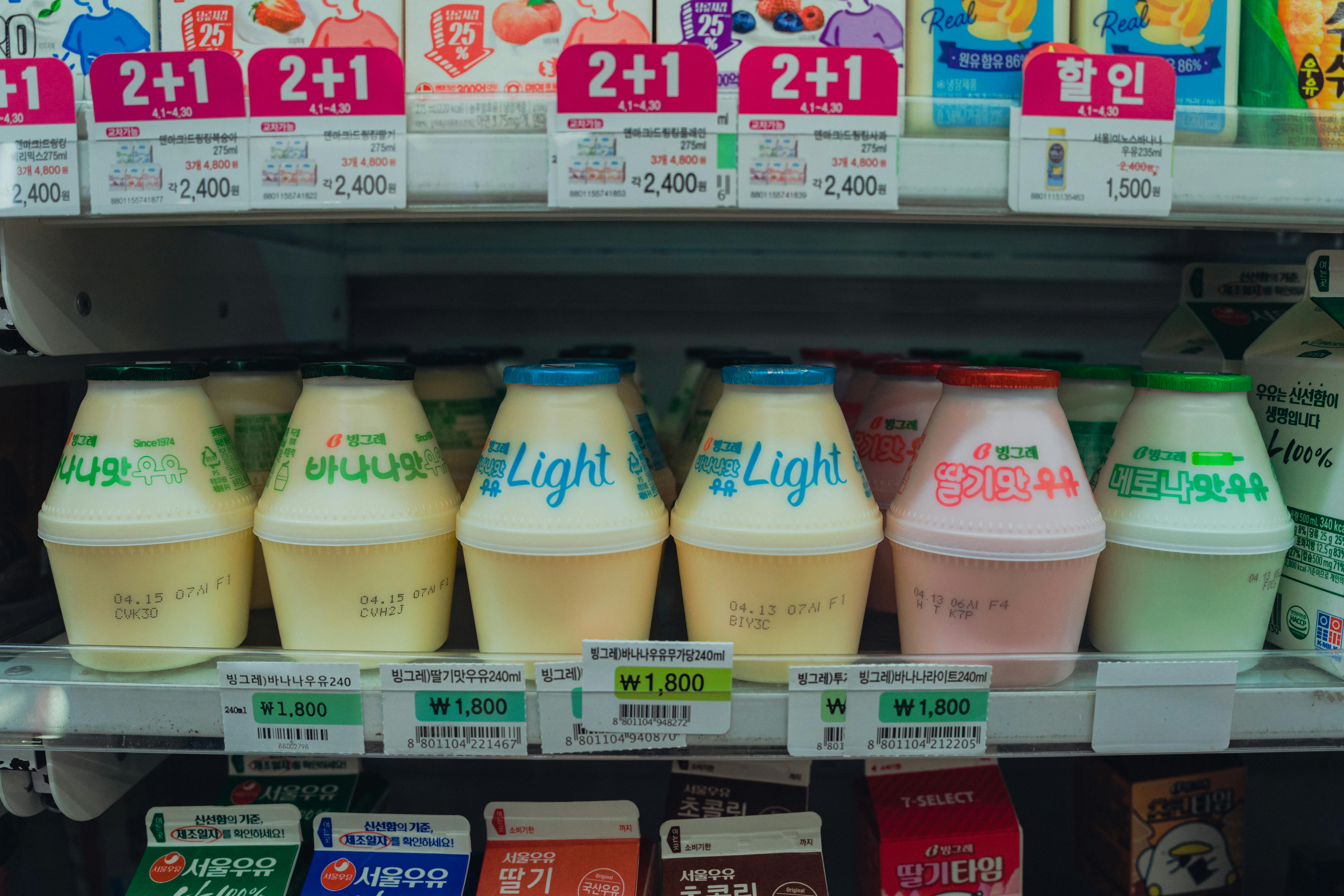
Don't worry about these places. All convenience stores (CU, GS25, 7-Eleven), chain cafés and restaurants, large supermarkets, department stores, duty-free shops, tourist attraction ticket counters, hotels and guesthouses, pharmacies, hospitals, and most shopping malls all accept cards without issue.
Bring cash for these
Have cash ready before visiting these places. Traditional markets (Gwangjang Market, Namdaemun Market, Tongin Market), small neighborhood restaurants and pojangmacha (street food stalls), some temple entrance fees, coin-operated lockers, and some jjimjilbang (Korean sauna/bathhouses) still run on cash only.
Traditional markets are one of the highlights of any Korea trip — but going without cash means you can't eat anything. Gwangjang Market bindaetteok (mung bean pancakes), Namdaemun kalguksu noodles, Tongin Market lunchbox — all cash. I always make sure to have cash on me before heading to a market. Don't skip this step.
How much cash do you actually need?
Minimum: ₩50,000–100,000 (about $35–75) covers emergencies, small restaurants, and market snacks. If you're planning a serious traditional market day, add another ₩100,000–150,000. Small denomination bills (₩1,000 and ₩5,000) are useful for vending machines, coin lockers, and street food vendors.
One thing that genuinely reduces cash pressure in Korea: there is no tipping culture. You don't tip at restaurants, cafés, or taxis. Leaving a tip can actually cause confusion. This alone means your cash goes further here than in many other travel destinations.
Where to exchange currency
Where you exchange makes a real difference to how much you get. Here's the honest breakdown.
Myeongdong money exchange — best rates in Seoul
This is where I always send friends. The private exchange booths in Myeongdong offer significantly better rates than banks — sometimes 5–10% more favorable. They handle major currencies including USD, EUR, JPY, and CNY. You bring cash and exchange it for Korean won on the spot. My standard advice: exchange just a small amount at the airport for immediate transport costs, then get the rest done in Myeongdong. It's genuinely worth the small detour.
City banks
KEB Hana, Shinhan, and Woori banks all offer currency exchange. Rates are less favorable than Myeongdong booths but the process is safe and some branches have English support. You'll need your passport.
ATM withdrawals
Woori, Shinhan, and KEB Hana ATMs, as well as 7-Eleven convenience store ATMs, are generally compatible with foreign cards. Foreign card fees plus ATM fees stack up, so withdraw larger amounts less frequently rather than making small withdrawals repeatedly.
Incheon Airport exchange — last resort only
Airport exchange rates are the least favorable. Change only a small amount on arrival — enough for transport to your accommodation (around ₩30,000–50,000) — and handle the rest in the city.
Wise / Revolut travel cards
If you travel frequently, these are worth setting up before your trip. Both offer near-zero foreign transaction fees and competitive exchange rates. I use travel-specific cards like these myself when I go abroad, and the difference compared to a regular bank card is noticeable. Getting one of these sorted before departure takes away most of the currency stress.
T-money card — get this as soon as you arrive
The T-money card is the single most useful item you'll get on your Korea trip. It's a prepaid transit card that works on the subway, buses, some taxis, and even for purchases at convenience stores. Buy it the moment you land.
Where to buy: any convenience store nationwide (CU, GS25, 7-Eleven) — no appointment, no ID needed, instant purchase. The card itself costs around ₩2,500. Top it up at the convenience store counter with cash in ₩1,000 increments. It works on the Seoul subway and bus network, and on public transit in Busan, Jeju, and most other cities too. Transfer discounts between subway and bus are applied automatically. Unused balance (above ₩500) can be refunded at a convenience store minus a small fee.
Climate Card (기후동행카드) — unlimited transit passes for tourists
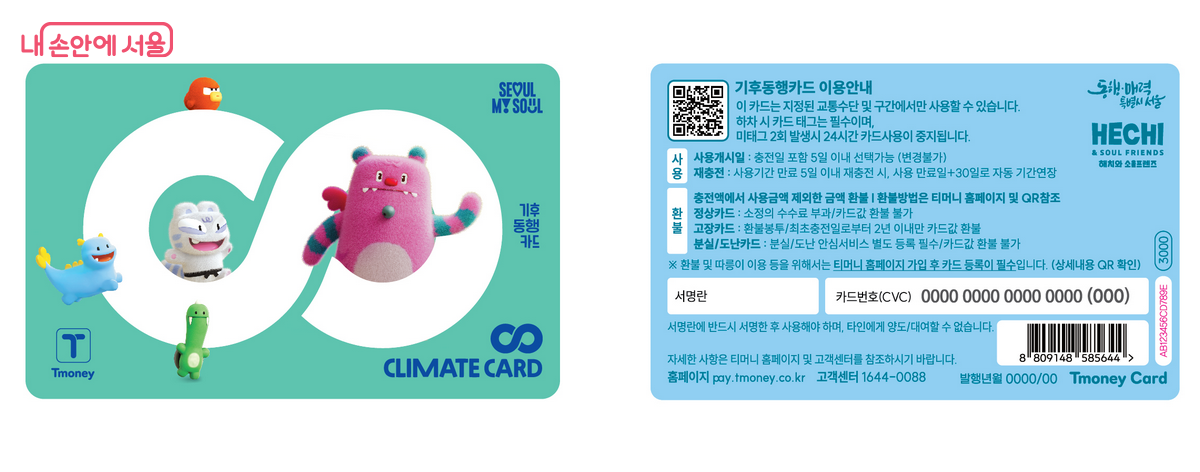
If you're spending several days in Seoul and expect to use the subway and buses heavily, the Climate Card (기후동행카드) is worth knowing about. It's an unlimited transit pass for the Seoul subway, Seoul-licensed buses, and Seoul's public bike share (Ttareungi). For tourists, short-term passes are available.
Tourist short-term passes (단기권)
These are designed specifically for visitors and available in multiple durations. 1-day pass: ₩5,000 / 2-day pass: ₩8,000 / 3-day pass: ₩10,000 / 5-day pass: ₩15,000 / 7-day pass: ₩20,000. Each pass gives you unlimited rides on the Seoul subway and city buses for the selected period, starting from the moment you first use it.
To put that in context: a single subway ride in Seoul costs around ₩1,400–1,600. If you're taking more than 3–4 rides per day, the 3-day pass at ₩10,000 starts to make sense. For a week-long trip with lots of public transit use, the 7-day pass at ₩20,000 is genuinely excellent value.
Important notes for foreign visitors: the physical card must be purchased in person — the app version is not available for international visitors. Buy the physical card at stations on Seoul Metro lines 1–8, or at convenience stores near lines 9, Sinlim, and Ui-Sinseol. Top up at the charging machines inside subway stations. The card covers Seoul only — it does not work in other cities, and routes like Sinbundang Line and express airport buses are excluded.
For most visitors, the T-money card is simpler if your trip covers multiple cities. But if you're Seoul-focused and moving around a lot, the Climate Card short-term pass is a genuinely smart option.
DCC warning — don't make this expensive mistake
When you pay by card in Korea, the terminal may ask: "Would you like to pay in Korean Won (KRW) or your home currency (USD/GBP/etc.)?" This is called Dynamic Currency Conversion (DCC), and it is a trap.
Always choose Korean Won (KRW). If you select your home currency, the exchange rate applied is set by the merchant's bank — not your card issuer — and it typically includes a 3–8% premium that goes directly against you. The difference on a ₩200,000 transaction could be ₩6,000–16,000 lost for no reason. When in doubt, always pick KRW. If the terminal doesn't give you a choice and processes in your home currency automatically, ask the staff to redo the transaction in Korean Won.
Local payment tips
Kakao Taxi app — Use this for all taxi rides. It shows the estimated fare before you get in, keeps a record of the trip, and accepts foreign card payment. Much safer than flagging a cab on the street, especially late at night.
Kakao Pay / Naver Pay — Korea's dominant mobile payment apps. Foreign visitors generally can't register for these, so just use your card instead. Don't worry about missing out — your card works fine everywhere these apps do.
PIN vs. signature — Korea mostly uses PIN entry for card payments. Some places will ask for a signature instead. Neither is unusual — just go with whatever the terminal shows.
Convenience store ATMs — 7-Eleven and GS25 ATMs are frequently compatible with foreign cards. Useful in a pinch if you need cash quickly.
Small denomination bills — Keep a few ₩1,000 and ₩5,000 notes on hand for vending machines, coin lockers, and street food. These situations come up more often than you'd expect.
Final thoughts — Korea is genuinely easy for travelers
Every time I travel, currency and payments are near the top of my pre-trip checklist. Will my card work? Do I need to exchange cash beforehand? How much? It's one of those logistics questions that sounds small but can cause real stress if you get it wrong.
Korea takes most of that stress away. Outside of traditional markets, almost everything runs on card here. I go through daily life in Seoul barely touching cash. For a traveler coming from abroad, that makes Korea genuinely comfortable to navigate — you don't need to hunt for ATMs, calculate how much to carry, or worry about getting stuck somewhere without the right payment method.
The things to remember are simple. Bring a Visa or Mastercard as your main card. Get a T-money card the moment you arrive. Have ₩50,000–100,000 in cash for markets and small local spots. And if you travel often, set up a Wise or Revolut card before your trip — it removes almost all the currency friction. Always pay in Korean Won (KRW) when given the choice at a terminal.
Do a little research before you go to any country, because every place is different. But Korea? Korea is one of the easier ones. Have an amazing trip!


