Best and worst times to visit Korea — a local's honest month-by-month guide
Table of contents
Intro — Korea's seasons are extreme, and that matters
Korea has four very distinct seasons, and the honest truth is that two of them — summer and winter — have become genuinely challenging to visit. Not impossible, not without their charms, but the summers are getting hotter every year and the winters are getting colder, and if you're planning a trip and timing is flexible, this information changes your decision.
I've lived in Seoul my whole life and I notice the shift. Summer in Korea used to be hot. Now it's the kind of heat where you step outside and immediately want to go back inside. Winter used to be crisp and cold. Now it's the kind of cold that gets through every layer and stays there. Korea is still absolutely worth visiting in any season — but knowing what you're walking into makes the trip much better.
This guide gives you the honest picture: the months that are genuinely wonderful, the months that come with real challenges, and the specific dates that affect crowds, transport, and accommodation pricing in ways that can completely reshape your experience.
Bottom line up front: May and October are Korea's golden travel months. April and November are strong runners-up. Mid-July through August (monsoon + peak heat), late December through February (deep winter), and the Golden Week holidays around May 5th are the periods that require the most planning — or avoidance.

Best times to visit Korea
May — the Queen of Seasons
If I had to pick one month, it would be May without hesitation. Koreans even have a name for it: 계절의 여왕 — the Queen of Seasons. And it earns that title. Cherry blossoms from April have faded, but roses come into bloom, the parks turn a deep lush green, and the temperature settles into a range that's warm enough for a t-shirt but not yet humid enough to be uncomfortable. Daytime highs of 20–25°C (68–77°F), mild evenings, and more sunny days than any other spring month.
There is one caveat: Golden Week. Children's Day falls on May 5th every year, and when it aligns with surrounding weekends — which it frequently does — it creates a string of consecutive holidays that sends the entire country into motion. KTX trains book out weeks in advance. Popular destinations fill up. Accommodation prices climb. The holiday energy is festive and worth experiencing, but if you want a relaxed trip, either plan around the holidays specifically or book everything very early. The rest of May, outside of Golden Week, is as close to perfect as Korean weather gets.
October — clear skies and autumn color
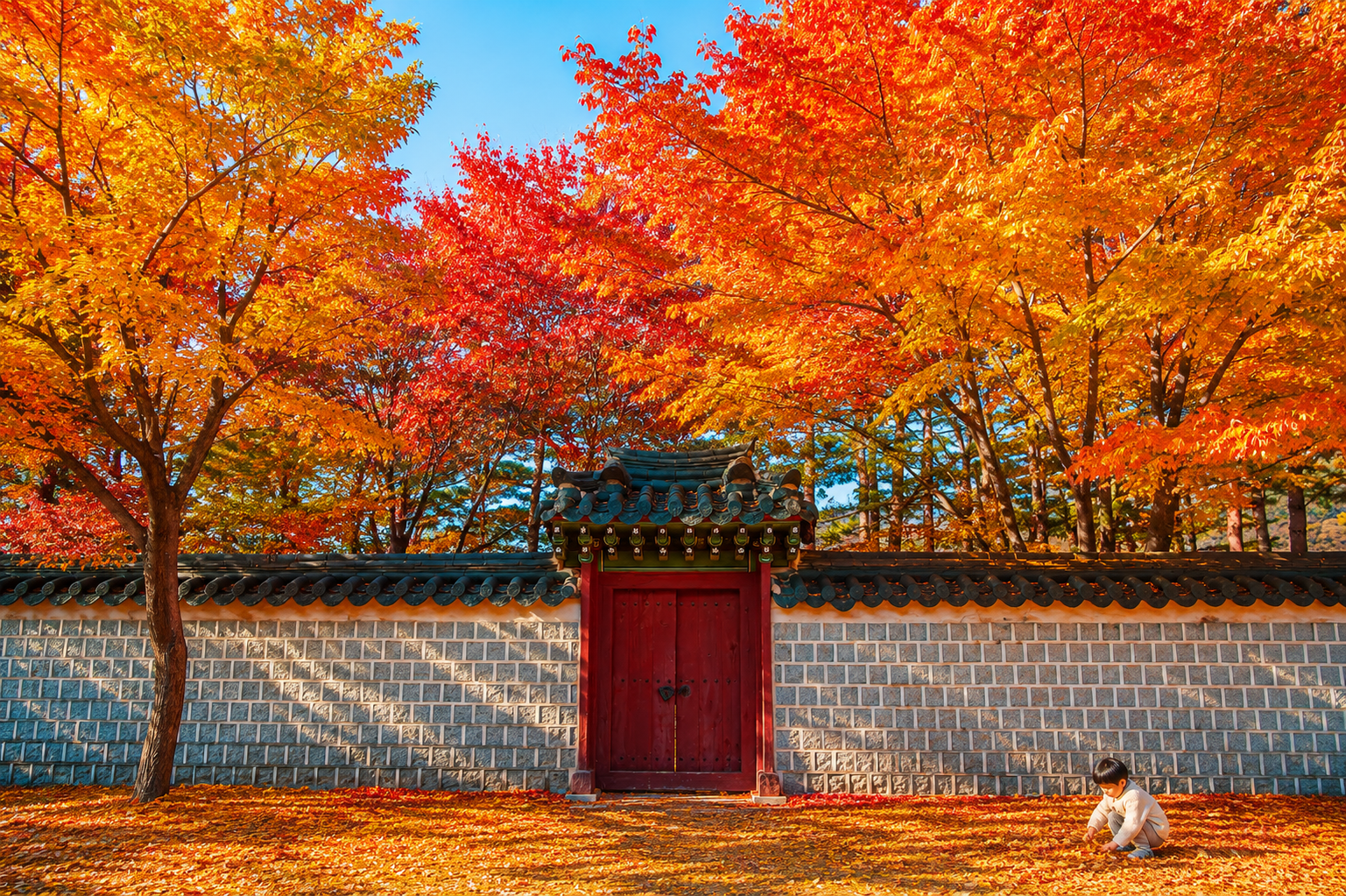
October is May's equal in a completely different register. The summer heat has finally broken, the humidity is gone, and the sky has that particular October clarity that makes every photo look better than it should. Autumn foliage starts arriving in the mountains from late September and sweeps through Seoul in mid-to-late October — the parks, the palace grounds, the hiking trails all shift to red and gold in a way that's genuinely worth timing a trip around.
Temperatures are perfect for walking — 15–20°C (59–68°F) during the day, jacket-worthy in the evenings. It's one of the most popular months for domestic Korean travel, which means the good spots get busy on weekends, but the overall atmosphere is wonderful. Seoulites are out in force, making the most of good weather before winter arrives. The city feels alive in a way that's different from other seasons.
April — cherry blossoms and the last of easy spring
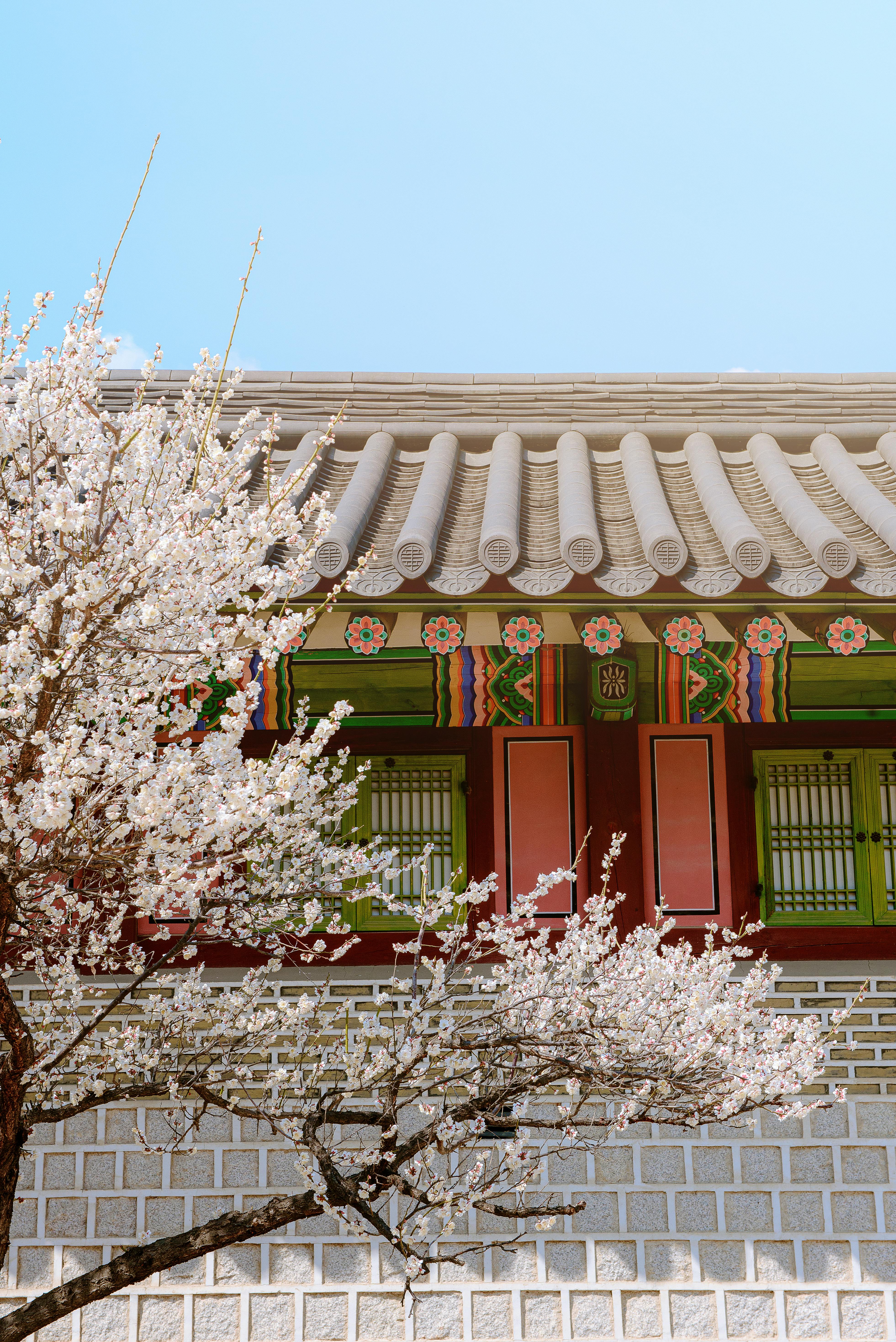
April is spectacular, with one significant consideration. Cherry blossom season — typically arriving in late March or early April in Seoul, peaking for about a week to ten days — is genuinely one of the most beautiful things Korea offers. Gyeongbokgung, Yeouido, the Han River parks, the palace paths: the combination of old stone architecture and pink blossoms is the kind of thing you plan trips around.
The consideration: it's also one of the most crowded periods of the year. Everyone knows about cherry blossom season. Arriving early in the morning is the single most effective strategy — the difference between 8am and 10am at a popular blossom spot is the difference between a peaceful experience and a crowd management exercise. Beyond the blossoms, April weather in Seoul is variable — warm afternoons, cool mornings, occasional rain — so layering is essential.
November — autumn's quieter chapter
November is underrated. The foliage that peaked in October is still visible in early November, and more importantly, the crowds from October have thinned out considerably. Temperatures are cooler — 10–15°C (50–59°F) during the day, getting genuinely cold toward the end of the month — but the clarity of the air and the low-crowd conditions make it an excellent choice for visitors who prioritize experience over perfect weather. By late November, winter is arriving and the calculus changes. But early November? One of Seoul's best-kept secrets.
Times to think twice about visiting
July–August — monsoon and the real Korean summer heat
I want to be straightforward about this: Korean summers have gotten genuinely extreme. This isn't a matter of "it's a bit warm" — this is serious heat that Koreans themselves find difficult. I live here and I find late July and August hard. Temperatures regularly hit 35°C (95°F) and above, with humidity that makes every degree feel like more. The heat index on bad days is something else entirely.
Then there's the monsoon (장마), which typically runs through July and into early August. Heavy rain, sometimes for days at a stretch, disrupting outdoor plans completely. The combination of monsoon rain and post-monsoon heat makes this the period that's most difficult to enjoy if you're planning to spend significant time outdoors — which in Korea, with its palaces, markets, parks, and street culture, you almost certainly are.
This doesn't mean Korea in summer is worthless — the food scene continues, indoor experiences are excellent, and some people genuinely enjoy the intensity of it. But if timing is flexible and outdoor sightseeing is a priority, summer is the hardest season to recommend.
Late December–February — the deep winter
Korean winters are cold. Not manageable-cold. Bone-cold. Seoul in January sits around -5°C to -10°C (14–23°F) on average, with wind chill that drives the felt temperature significantly lower. The cold comes from Siberia, it's dry and cutting, and it doesn't respond to the kind of layering that works in mild European winters. You need proper winter gear — heavy coat, thermal layers, serious gloves — and even then, extended time outdoors is uncomfortable rather than pleasant.
The practical consequence: the outdoor experiences that make Korea so compelling — the palace walks, the market browsing, the Han River parks, the neighborhood wandering — all become significantly harder to enjoy. You can still do them, but you're doing them against the weather rather than with it. Late December and February are the coldest and least visitor-friendly months of the year. January falls in between but shares the same character.
Seollal and Chuseok — the major national holidays
These two holidays — Seollal (설날, Lunar New Year) in late January or February, and Chuseok (추석) in September or October — are the biggest travel events in the Korean calendar. Tens of millions of people move across the country simultaneously to be with family. The consequences for visitors are significant and predictable.
KTX and intercity buses book out entirely, often weeks in advance. Accommodation in popular areas fills up and prices rise sharply. Many smaller restaurants, shops, and some attractions close for the holiday period — typically three days around each holiday, sometimes longer. Seoul itself becomes quieter in an unusual way as residents leave for their hometowns, while tourist areas remain active. Traveling during these holidays is possible but requires early planning for transport and realistic expectations about what's open. If you haven't booked transport in advance, you may find yourself with very limited options.
Golden Week — around May 5th
Children's Day (어린이날) on May 5th is a national holiday, and when it connects with Buddha's Birthday — which also falls in May on the lunar calendar — the result is a stretch of consecutive days off that Koreans call Golden Week. The entire country is on the move. KTX trains sell out. Popular destinations hit their highest crowd levels of the year. Hotel prices spike. If you're already in Korea, this can be a festive and interesting experience — the parks and family-friendly spots are wonderfully alive. But if you're planning around it, book everything early or consider adjusting your dates by a few days in either direction.
Month-by-month quick guide
March — Early spring. Still cool, occasional cold snaps. Cherry blossoms arrive late March in the south, Seoul blooms closer to April. Yellow dust (황사) begins. Good for those who don't mind variable weather and want pre-crowd blossom views.
April — Cherry blossom peak in Seoul. Genuinely beautiful. Crowded at blossom hotspots. Layer up for temperature swings. One of the best months overall despite the crowds.
May — Best month of the year. Warm, clear, rose season, outdoor everything. Watch for Golden Week around May 5th — book early or plan around it.
June — Late spring transitioning to early summer. Still pleasant in early June. Humidity starts building toward the end of the month. Pre-monsoon window that's underused by visitors.
July — Monsoon season. Heavy rain, heat building. Outdoor plans disrupted. Manageable with flexibility, but not ideal.
August — Hottest month. Post-monsoon heat is at its peak. Serious heat index. Not recommended if outdoor sightseeing is a priority.
September — Heat easing, humidity dropping. Early autumn arrives. Weather improving noticeably by mid-September. Watch for Chuseok — dates vary yearly by lunar calendar.
October — Best month of the year (tied with May). Perfect temperatures, blue skies, autumn foliage. Busy on weekends but worth it entirely.
November — Early November still has foliage and thin crowds. Getting colder as the month progresses. Underrated month for visitors.
December — Winter arrives. Cold getting serious by mid-month. Christmas atmosphere in the city is pleasant but outdoor time is limited.
January — Coldest month. Siberian cold, wind chill. Seollal holiday disruptions possible. For serious winter visitors only.
February — Still deep winter. Seollal often falls here. Cold beginning to ease toward the very end of the month. Last of the difficult months.
Final thoughts — the honest verdict
If timing is entirely flexible, the answer is simple: come in May or October. These two months represent Korea at its most hospitable — the weather cooperates, the country is beautiful, and the full range of outdoor and indoor experiences is available without conditions. I say this as someone who lives here year-round and has experienced every month many times over.
If timing is partially flexible, April and November are both excellent choices with small caveats — crowds for April, cooling temperatures for November. June is underrated and worth considering if summer dates are your only option.
The honest message about summer and winter: Korea's extremes are genuinely extreme. This isn't false modesty or exaggeration. The summers have become hotter with each passing year, and the winters are the kind of cold that requires real preparation. Both seasons have their own character and their own rewards — but they require the right mindset and the right gear. Going in knowing that makes all the difference.
Whatever month you choose, Korea will give you something worth the trip. Just pack accordingly. Have an amazing visit!


