What not to do in Korea — a local's honest guide to Korean etiquette
Table of contents
- Intro — why looking this up before you travel is always worth it
- What not to do on public transport
- Dining mistakes to avoid
- Respecting elders
- Temple and traditional space etiquette
- Photography — what to watch out for
- Street and public space behavior
- Payment and money etiquette
- Final thoughts — Korea is more forgiving than you think
Intro — why looking this up before you travel is always worth it
Whenever I travel internationally, one of the first things I do is look up the local rules. Not just the big obvious things — I mean the specific behaviors that are totally normal at home but could be considered rude or even illegal somewhere else. Every country has them, and finding out after the fact is always more uncomfortable than knowing in advance.
I remember visiting Singapore and being genuinely surprised by how different the rules were from Korea. Things I wouldn't think twice about back home suddenly had real consequences there. But once I understood the reasoning behind those rules — keeping the city clean, maintaining public order, respecting shared spaces — I didn't just comply. I actually agreed with them. It made sense. And that's the thing about cultural etiquette: when you understand where it comes from, it stops feeling like a restriction and starts feeling like a shared value.
Korea is similar. There are behaviors that are completely normal in other countries that read very differently here. None of them are obscure or unreasonable — most of them are rooted in respect for others and pride in shared spaces. Knowing them before you arrive won't limit your experience. It'll improve it. So let's get into it.
Quick summary: Stay quiet on the subway, don't stick chopsticks in rice, don't sit in priority seats, don't photograph strangers without permission, don't litter. Most of this is just common sense once you know the context.
What not to do on public transport
Don't talk loudly or play audio without headphones
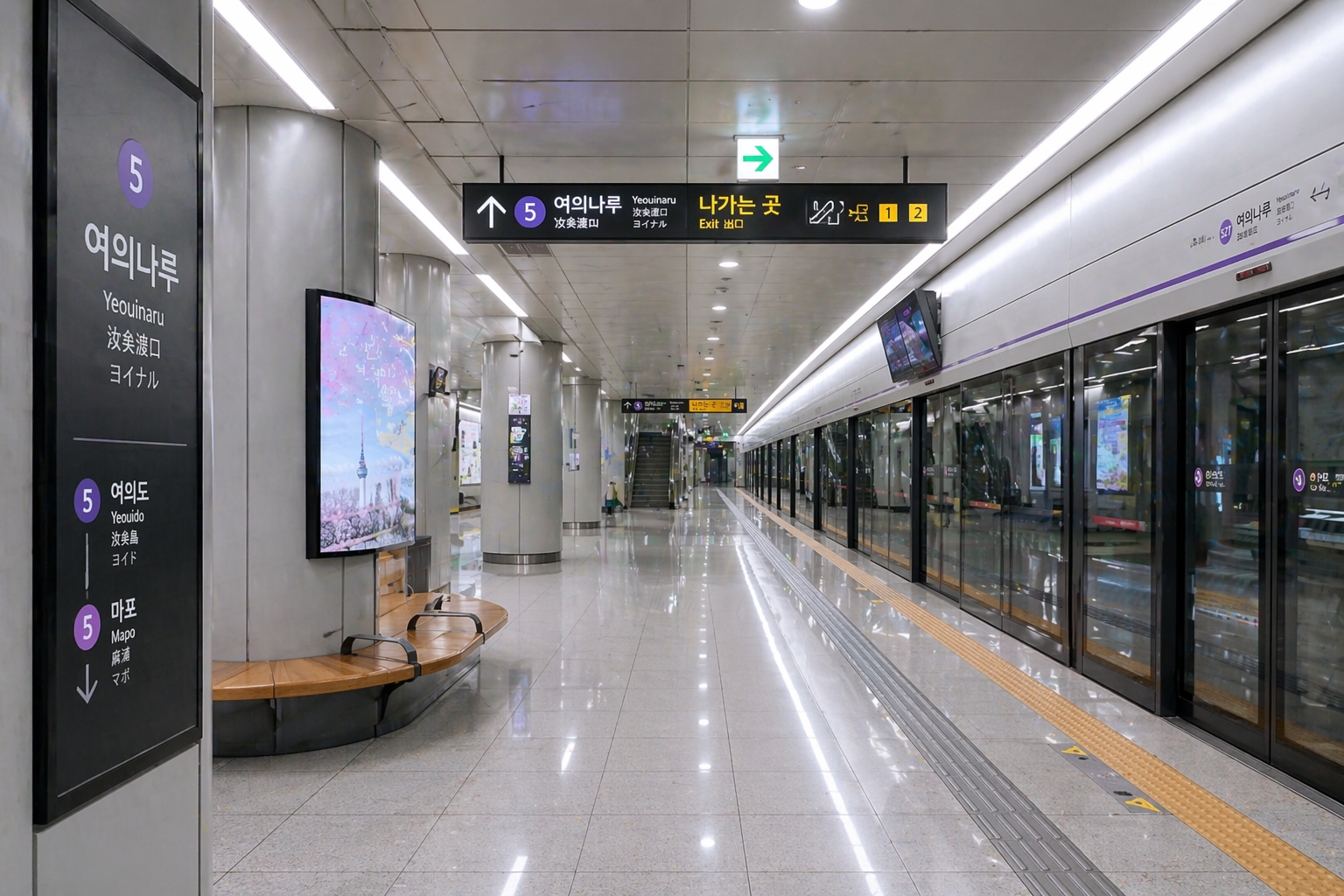
The Seoul subway is one of the quietest public spaces in any major city in the world. Koreans ride in near-silence — headphones in, eyes down, often asleep. Conversations in a normal speaking voice feel out of place here. If you're traveling in a group, keep it to low voices. And never, ever play audio through your phone speaker. Bring earphones and use them for the entire ride. This is probably the single most noticeable difference between Korean subway culture and what most Western visitors are used to.
Don't sit in the priority seats
The seats marked in a distinct color — usually pink or blue — at the ends of each car are reserved exclusively for elderly passengers, pregnant women, and people with disabilities. Koreans will stand for an entire journey rather than use these seats. Even if the train is packed and the priority seat is empty, leave it. This is one of those cultural norms that's observed very strictly, and sitting in one as a visibly healthy young person will draw looks.
Don't eat on the subway or bus
Eating on the subway and bus is not allowed. This includes snacks, not just full meals. Drinks in sealed containers are generally fine, but pulling out food is a no. The rule exists to keep the carriages clean and odor-free, and it's widely followed. If you're hungry between stops, step out at a station and find a convenience store.
Don't block the left side of the escalator
Korea has a culture of standing on the right side of escalators and keeping the left side clear for people walking up. Officially this is changing toward a "stand on both sides" policy in some stations, but in practice many Koreans still move on the left. Watch what people around you are doing and follow their lead, especially in busy stations.
Dining mistakes to avoid
Don't lift your rice bowl off the table
This trips up a lot of visitors from Japan or China, where lifting bowls is standard practice. In Korea, bowls stay on the table. Rice is eaten with a spoon, not chopsticks, and the bowl stays put throughout the meal. Lifting it to your face reads as bad manners here, even though it's perfectly polite elsewhere in Asia. Once you know this, it's easy to adjust.
Don't stick chopsticks upright in rice
This is one of the most important things on this entire list. In Korea, sticking chopsticks vertically into a bowl of rice is associated with funeral rites — it's how food is offered to the deceased. Doing it casually at a restaurant will make Koreans genuinely uncomfortable. When you set your chopsticks down during a meal, place them horizontally on a chopstick rest or across the edge of a dish. This takes about three seconds to learn and prevents a very awkward moment.
Don't start eating before the eldest person at the table
In a group dining setting, especially with Korean locals, wait for the oldest person present to pick up their utensils before you start eating. This applies most in home settings or traditional gatherings, but it's worth being aware of whenever you share a meal with Korean people. Watch the table, follow the rhythm, and you'll naturally fall into the right timing.
Don't tip
Korea has no tipping culture — at all. Restaurants, cafés, taxis, hotels — none of them expect or require a tip. Leaving money on the table will often result in staff chasing you out the door to return it. The service cost is considered part of the price you already paid. Enjoy your meal, say thank you on the way out, and that's genuinely all that's expected.
Respecting elders
Don't receive things with one hand from an elder
When an older person hands you something — food, a drink, money, any object — receive it with both hands, or support your right arm at the elbow with your left hand. A single casual hand extended in return reads as dismissive or disrespectful in Korean culture. This applies in reverse too: when giving something to an elder, use two hands. It's a small physical gesture that carries a lot of cultural weight here.
Don't drink facing an elder directly
At a table with older Koreans, turn your body slightly to the side before taking a sip of alcohol. Drinking directly facing an elder is considered rude. It sounds unusual before you've seen it, but once you're in the setting it becomes intuitive — you notice people doing it naturally all around you. Korean elders who see a foreign visitor do this correctly tend to be genuinely touched by it.
Don't ignore an elder entering a space
A small bow of acknowledgment when an older person enters a room or approaches is never wrong in Korea. Even a slight nod communicates awareness and respect. You don't need to stand, you don't need to say anything — just acknowledge. It costs nothing and earns a great deal.
Temple and traditional space etiquette
Don't wear revealing clothing
When visiting Buddhist temples or traditional spaces, very short shorts, sleeveless tops, and overtly revealing clothing are best left at the hotel. Some temples provide cover-up garments at the entrance, but arriving already appropriately dressed is always better. A cardigan or light scarf takes up almost no space in a bag and solves this completely.
Don't take disrespectful photos
Photography is generally permitted at Korean temples, but posing with your back to Buddhist statues, making exaggerated gestures, or treating the space like a backdrop for comedic content is considered very disrespectful. These are active places of worship, not just scenic spots. Move through them the way you'd want visitors to move through a place of worship in your own culture.
Don't keep your shoes on when asked to remove them
Some temple buildings, traditional hanok spaces, and even certain floor-seating restaurants require you to remove shoes before entering. If you see a row of shoes at the entrance, yours come off too. Line them up neatly. This is non-negotiable in Korean traditional spaces and extends to home visits as well — shoes always come off at the door.
Photography — what to watch out for
Don't photograph strangers without permission
Korea takes portrait rights seriously. Photographing specific individuals — particularly in indoor settings like cafés and restaurants — without their knowledge or consent is something Koreans are sensitive about. If someone ends up in your shot and notices, it can create a real moment of discomfort. Be mindful of who's in the frame, especially in close quarters. If you want to photograph someone, ask first. A gesture and a questioning look is usually enough to get the message across.
Don't photograph near military facilities without checking
South Korea has a significant military presence, and photography restrictions around certain facilities are real. Always check for signage before shooting near anything that looks like a military or government installation. In tourist areas this is rarely an issue, but it's worth being aware of if you're traveling off the beaten path.
Be thoughtful with photos at restaurants
Taking photos of your food is completely normal and widely done in Korea — Koreans do it constantly. Just be aware of other tables. Try not to let other diners end up in your shot, and avoid using flash in dimly lit restaurants. Food photos: totally fine. Capturing other people's private meals: not fine.
Street and public space behavior
Don't litter
Korea's streets are exceptionally clean, and that cleanliness is maintained partly through social expectation. Dropping litter — including cigarette butts — is genuinely frowned upon and can result in a fine. One thing that catches visitors off guard: public trash cans are surprisingly hard to find on Korean streets. The workaround: convenience store trash cans are available to anyone who bought something there, and you can always hold onto waste until you find one. Carry a small bag if you're snacking on the go.
Don't cut in line
Koreans take queuing seriously. Bus stops, elevator banks, restaurant waiting areas, ticket counters — wherever a line forms, it's expected to be respected. Cutting in front of people will draw immediate and visible disapproval. Find the back of the line and wait your turn. This is observed very consistently across all ages and contexts.
Don't eat while walking in regular streets
In street food areas like Myeongdong or traditional markets, eating while walking is completely normal — it's part of the experience. But in regular residential streets, near subway stations, or in non-food areas, eating on the move is considered somewhat uncouth by Korean standards. It's not illegal, but it draws attention in a way that being aware of will serve you well.
Don't be loud in public spaces
Korea values quiet in shared public spaces. Talking at full volume in a café, subway, or residential neighborhood stands out here in a way it might not in other countries. This isn't about being completely silent — it's about calibrating to the environment. If everyone around you is speaking softly, that's your cue.
Payment and money etiquette
Don't hand money over with one hand casually
The two-handed rule applies to money as well. When paying an older shopkeeper or vendor, hand over the cash with both hands or support your right arm at the elbow. Tossing money onto a counter or handing it over with one casual hand can come across as dismissive — particularly to older Koreans who grew up with a stronger emphasis on these gestures.
Don't choose your home currency when paying by card
When a card terminal asks whether you'd like to pay in Korean Won (KRW) or your home currency — always choose Korean Won. Selecting your home currency activates Dynamic Currency Conversion (DCC), which applies an unfavorable exchange rate set by the merchant's bank and adds a hidden fee of 3–8%. It sounds like a convenience but it's not. Always pay in KRW and let your own card issuer handle the conversion.
Final thoughts — Korea is more forgiving than you think
Reading through a list like this can make a country feel like a minefield. It's really not. Korean people are genuinely warm and understanding toward foreign visitors, especially ones who are clearly making an effort. Small mistakes made in good faith are almost always met with patience, not judgment.
What this list really is: preparation. The same way I look up the rules before visiting anywhere new — because every country has its own version of "this is just how we do things here" — knowing Korea's version in advance just means you can relax and enjoy the trip instead of figuring things out through awkward trial and error.
The countries I've found most rewarding to visit are often the ones with clear cultural expectations. When you know what those are and you respect them, you get a version of the destination that casual visitors don't always access. Korea rewards the traveler who pays attention. Go knowing this, and you'll have a genuinely better trip. Have an amazing time!
'Korea Travel Tips' 카테고리의 다른 글
| Where to Go Hiking in Seoul? — Achasan, Bukhansan & More (0) | 2026.05.26 |
|---|---|
| Wolmido Incheon — Is It Worth a Day Trip from Seoul? (0) | 2026.05.24 |
| Peak Seasons to Reconsider: Avoiding the Crowds in Korea (0) | 2026.05.22 |
| Where to Eat Bingsu in Seoul — Mango, Sulbing & Local Picks (0) | 2026.05.20 |
| When Is the Best Time to Visit Korea? — A Local's Honest Month-by-Month Guide (0) | 2026.05.18 |


